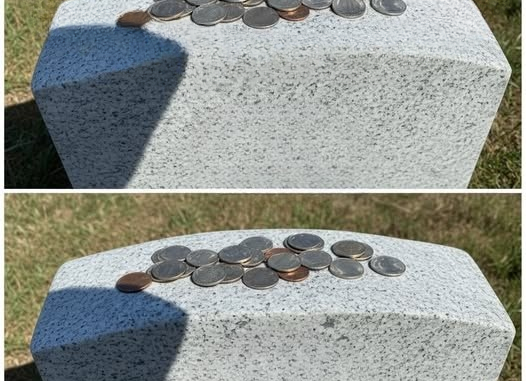
While walking through a cemetery—particularly one dedicated to members of the armed forces—you might notice small coins placed on top of gravestones. At first, these coins may appear to be random items left behind by visitors. In reality, however, this simple act holds deep meaning. Whether it is a penny, nickel, dime, or quarter, each coin carries a message of remembrance, respect, and recognition of a life lived and, in many cases, a sacrifice made.
This quiet tradition has continued for many years, connecting generations and cultures through a shared act of remembrance. It is especially common in military cemeteries, where the bonds among service members and their families are honored through subtle but meaningful gestures. Looking more closely at this practice reveals a powerful way in which people maintain connections with those who have passed away.
What may seem like a small or casual gesture often carries a specific meaning. The type of coin placed on a grave can communicate different messages, ranging from simple remembrance to acknowledgment of shared service or deep personal bonds.
The most commonly left coin is the penny. Despite its small value, it represents a meaningful message: someone stopped to remember the person buried there. Leaving a penny shows that a visitor has taken a moment to acknowledge the individual and their life.
For families of service members, seeing pennies on a loved one’s gravestone can be deeply comforting. It signals that others—sometimes even strangers—have paused to honor the memory of the person who is buried there. This small act reassures families that their loved one’s sacrifice and legacy continue to be remembered.
A nickel carries a slightly deeper message. In military tradition, leaving a nickel often means that the person placing it served alongside the deceased during training or in the early stages of military service. It represents camaraderie and shared experiences that were formed during demanding times.
This gesture honors the friendships and mutual respect that grow among people who train and work together in service. It reflects the strong bonds that develop through shared challenges.
A dime represents an even closer connection. When someone leaves a dime on a grave, it traditionally indicates that the visitor and the deceased served together in combat. Experiences in combat often create powerful and lasting relationships, as soldiers rely heavily on one another in difficult and dangerous situations.
Leaving a dime recognizes that these experiences were shared and that the bond between those individuals extended far beyond ordinary friendship.
The quarter holds the most significant meaning in this tradition. Placing a quarter on a gravestone often signifies that the person leaving it was present at the time of the soldier’s death or shared their final moments. Because of this, the quarter represents one of the deepest levels of personal connection and respect.
In addition to the emotional symbolism, this tradition can also have practical effects.
For grieving families, the presence of coins on a gravestone can offer comfort. Seeing that others continue to remember their loved one helps reinforce the idea that their life and service still matter to the broader community. These small tokens serve as visible reminders that memory and respect continue long after a person’s passing.
In some cemeteries, especially those honoring military veterans, coins that accumulate over time are occasionally collected and donated to organizations that support veterans. Even though each coin is small, together they can become meaningful contributions that assist with programs related to healthcare, housing, or education for former service members. In this way, the tradition honors the deceased while also helping living veterans.
The custom of leaving coins on graves also has historical roots that stretch back centuries.
In ancient times, coins were sometimes placed on or near the bodies of the deceased as part of burial rituals. In Greek mythology, for example, coins were used as payment for Charon, the ferryman who transported souls across the river into the afterlife. This act symbolized respect for the journey of the deceased and a desire to ensure safe passage beyond life.
Over time, the practice evolved into modern traditions. In the United States, the custom became widely recognized after the Vietnam War as a discreet way for soldiers to honor fallen comrades. Rather than large public displays, coins offered a quiet and respectful tribute that communicated solidarity and remembrance.
Today, this practice continues in military cemeteries around the world.
Visitors who encounter coins on gravestones can deepen their understanding of the tradition by keeping a few simple ideas in mind. First, coins left on graves should never be removed. Each coin was placed intentionally, and removing it would disrupt the meaning behind the gesture.
Learning the symbolism behind different coins can also enhance appreciation of the tradition. Pennies represent remembrance, nickels acknowledge shared training or service, dimes signify combat companionship, and quarters often indicate that the person was present during the soldier’s final moments.
Most importantly, visitors should recognize the act as a meaningful ritual. Taking a moment to reflect on the story behind each coin can create a deeper connection to the history and lives represented in the cemetery.
Beyond symbolism, many coins also carry personal stories. Veterans sometimes visit the graves of former comrades and leave coins as a way of expressing emotions that may be difficult to put into words. Feelings of loyalty, grief, gratitude, and friendship can all be conveyed through this simple gesture.
Some soldiers have described placing a quarter on the grave of a close friend who died during combat, explaining that the coin represents the final moments they experienced together. Others have left coins on graves of individuals they never personally knew but whose bravery and sacrifice inspired them.
Even outside of military settings, the act of leaving coins on graves can carry meaningful stories. In small communities, children sometimes place pennies on the graves of teachers, family members, or respected community figures. These gestures help teach younger generations the importance of remembering those who came before them.
The practice also exists in various forms across different cultures.
In parts of Europe, visitors often leave small tokens such as coins, flowers, or stones on graves during commemorative holidays like All Saints’ Day. In Jewish tradition, people place small stones on gravestones to symbolize remembrance and presence.
In several Asian cultures, offerings left at graves may include coins, incense, or symbolic paper currency intended to show respect and ensure good fortune for the deceased in the afterlife.
Although these customs differ in their details, they share the same underlying purpose: honoring the memory of those who have passed and maintaining a connection between generations.
Within the United States, the tradition can also vary by region. In older cemeteries on the East Coast, coins may be found alongside flowers or small American flags placed in tribute to military service. In some Western or rural cemeteries, coins might appear next to handwritten notes, photographs, or personal keepsakes.
One of the most meaningful aspects of this tradition is its ability to create a sense of community. Visitors who notice coins on gravestones often feel reassured that others care about preserving the memory of those buried there. Families of fallen soldiers frequently express gratitude for these quiet acts of remembrance.
In some places, historical societies or veterans’ organizations help maintain the tradition by respectfully collecting coins and directing them toward charitable efforts that support veterans and their families.
The emotional impact of this practice should not be overlooked. Many visitors report feeling a strong sense of connection when they see coins resting on gravestones. The simple act of placing a coin allows people to express feelings of respect, grief, or gratitude through a tangible action.
Psychologists often note that rituals like this help individuals process loss. A physical gesture can provide comfort by giving people a way to express emotions that may otherwise feel difficult to articulate.
In a quiet cemetery environment, a coin becomes both a symbol and a moment of reflection.
Even in an era defined by technology and rapid change, small physical traditions like this continue to carry powerful meaning. Passing this practice down to younger generations helps preserve not only history but also values such as gratitude, empathy, and respect.
Families, educators, and community groups often encourage children to learn about the symbolism behind coins on graves. Each visit to a cemetery can become an opportunity to reflect on history and understand the sacrifices made by others.
Ultimately, the practice of leaving coins on gravestones represents something larger than the coins themselves. Whether through coins, flowers, letters, or quiet reflection, acts of remembrance remind us that lives and stories continue to matter long after someone has passed away.
Coins simply provide a small, visible symbol of these deeper emotions.
Each coin left on a gravestone tells a silent story—one of memory, respect, friendship, or sacrifice. Together, these small gestures create a powerful tribute that connects the past with the present and ensures that the legacy of those who came before us continues to be honored.