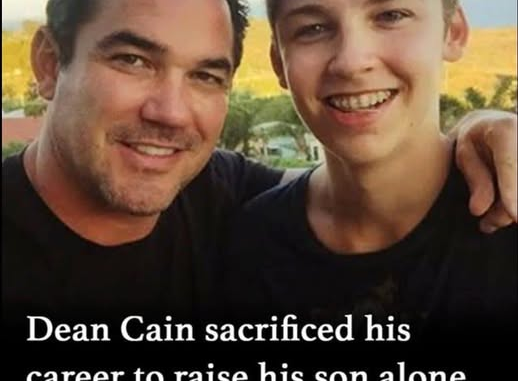
Psychologists, educators, and child development experts consistently highlight the crucial influence a father has on a child’s emotional health, confidence, and resilience. Children with a consistently present, caring father are more likely to develop security, self-esteem, and social skills. Dean Cain’s life exemplifies this principle, showing how prioritizing family over career can leave a lasting, positive impact.
Although widely recognized for his acting career—most famously as Superman in Lois & Clark: The New Adventures of Superman—Cain made a deliberate choice to step back from Hollywood to focus on raising his son. This decision was informed by his own childhood experiences and a clear understanding of the importance of being a reliable, present father.
Cain, born Dean George Tanaka on July 31, 1966, in Mount Clemens, Michigan, faced early challenges when his biological father, Roger Tanaka, left the family during his toddler years. His mother, Sharon Tanaka, managed single parenthood, but the absence of a father left a lasting impression on Dean. At age three, his mother remarried filmmaker Christopher Cain, who adopted Dean and his brother, providing stability, guidance, and a model of dependable fatherhood. These formative experiences shaped Dean’s understanding of the lifelong importance of a caring parental presence.
Before acting, Cain had aspirations for a professional football career. Excelling academically and athletically at Princeton University, he attracted attention from professional scouts, but a severe knee injury abruptly ended his sports ambitions. Though initially devastating, this setback redirected his focus and allowed him to apply the discipline and perseverance he cultivated in sports to his future acting career.
Cain’s acting breakthrough came in 1993 with Lois & Clark: The New Adventures of Superman, earning international recognition for his portrayal of Clark Kent. Despite rising fame, fatherhood soon became his central priority. In June 2000, Cain welcomed his son, Christopher, with then-partner Samantha Torres. Following their separation, Cain gained sole custody in 2011, fully embracing hands-on parenting.
Cain took primary responsibility for daily routines, from cooking meals to attending school events and helping with homework, creating a stable, nurturing environment for his son. His commitment to fatherhood often required turning down professional opportunities, demonstrating the sacrifices parents make to ensure their children feel secure and valued. Shared experiences, such as sports, trips, and creative projects, strengthened the father-son bond, imparting values, traditions, and life lessons.
Christopher also has two half-siblings from his mother’s later relationships, and Cain’s approach to blended family life emphasizes inclusion, affection, and respect, showing that meaningful family connections rely on love and presence rather than biology alone.
Cain’s story underscores a key principle in child development: emotional engagement matters far more than wealth or public recognition. By prioritizing fatherhood, he provided his son with a foundation for confidence and resilience, enabling him to navigate life’s challenges.
Cain’s philosophy centers on presence rather than perfection. Small, consistent actions—helping with homework, preparing meals, attending school events—communicate value, love, and commitment. He also uses everyday activities to teach life skills, such as responsibility, patience, and creativity through cooking, and discipline and teamwork through sports.
Emotional intelligence is another focus of Cain’s parenting. He models empathy, communication, and self-awareness, encouraging his son to process emotions constructively. These skills contribute to healthier relationships, greater resilience, and long-term mental well-being.
Balancing a Hollywood career with active fatherhood required intentional choices. Cain evaluated professional opportunities against their potential impact on his son, often postponing or declining work to maintain involvement in his child’s life. This approach demonstrates that career ambitions and attentive parenting can coexist when guided by careful planning and prioritization.
As his son grew, their relationship evolved from caregiver-dependent to a genuine friendship built on mutual respect and shared experiences. Cain’s approach illustrates that fatherhood is dynamic, shifting from guidance to mentorship and companionship as a child matures.
Cain’s story offers lessons for modern fathers: prioritize consistent presence over grand gestures, make intentional decisions about time and priorities, teach through involvement in daily routines, foster emotional growth, and adapt as children’s needs change.
Beyond his immediate family, Cain’s example challenges celebrity culture’s emphasis on fame and success over parental engagement, highlighting the long-term benefits of attentive, intentional fatherhood. Drawing from his own experiences of absence and presence, Cain turned awareness into action, proving that demanding careers can coexist with dedicated parenting.
Ultimately, Dean Cain’s most enduring legacy may not be his television roles or fame, but the emotional foundation he built for his son—a framework of love, stability, guidance, and support. His life demonstrates that true success is measured by the quality of relationships and the positive impact we have on those we care for. By prioritizing fatherhood, Cain exemplifies the profound influence of presence, dedication, and intentional parenting.