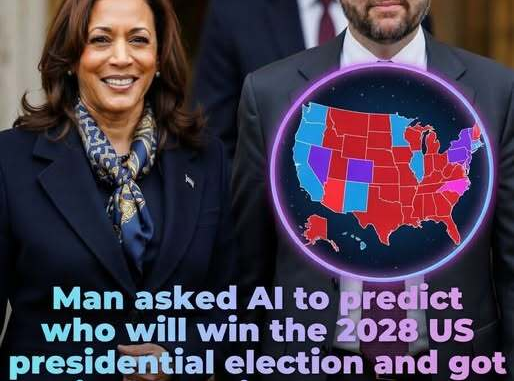
In this simulation, the future of American politics is distilled into patterns and modeled scenarios, yet the implications feel very real. Kamala Harris emerges as an early Democratic frontrunner, benefiting from strong name recognition and institutional support. At the same time, the model reflects ongoing divisions within the party, showing that early advantages don’t always guarantee unified momentum.
On the Republican side, JD Vance appears as a prominent figure, with his support connected to broader shifts in voter behavior. The simulation ties his standing to changes in Midwestern and working-class communities, regions that have experienced evolving political preferences over recent elections. His rise is portrayed not as a surprise, but as part of a longer-term realignment in the electorate.
As the simulated Electoral College map takes shape, it highlights more than a single potential outcome. Some traditionally competitive states lean in new directions, while regions once considered stable appear less predictable. These patterns reflect underlying demographic and political changes that could influence how both parties strategize for future campaigns.
The creators of the simulation stress that it is not a prediction, but a tool for exploring possibilities. By charting trends and testing assumptions, the model helps examine how shifts in voter behavior might shape election outcomes. In this sense, the exercise is less about forecasting a specific result and more about understanding how the political landscape itself may be evolving.