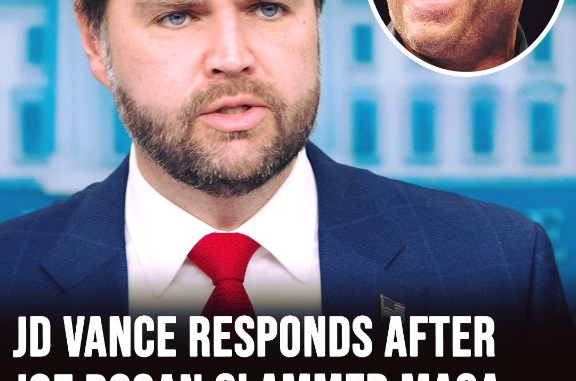
Joe Rogan, the well-known podcaster and UFC commentator, stirred controversy after describing MAGA supporters as “uninteresting and unintelligent,” triggering strong reactions across social media and political circles.
His remarks reignited debate about how supporters of Donald Trump are perceived, especially among influential public figures.
Although Rogan previously supported Trump ahead of the 2024 election, he has recently become more critical of the administration, particularly regarding issues like the handling of Jeffrey Epstein-related files and U.S. involvement in foreign conflicts.
During a March 26 episode of The Joe Rogan Experience, Rogan sharply criticized the MAGA movement, calling it “a bunch of dorks” and expressing frustration with the slogan “Make America Great Again” and those who embrace it.
His comments quickly drew a response from Vice President JD Vance, who defended MAGA supporters, emphasizing that they include serious, dedicated Americans who care about the country’s future.
Vance acknowledged that every group has its share of “dorks” but stressed unity, saying the movement welcomes anyone committed to improving the nation.
In an interview, Vance also addressed claims attributed to Rogan about deportation policies, stating that such assertions were incorrect and not supported by actual data.
He argued that the current administration has taken stronger action on immigration enforcement than previous administrations, pointing to increased deportations and stricter border control measures.
According to Vance, while progress has been made, challenges remain due to past policies that allowed higher levels of unauthorized immigration.
The exchange between Rogan and Vance has sparked widespread public discussion, with many debating the influence of media personalities on political views and the fairness of broad criticisms of political groups.
Analysts note that the situation reflects deeper tensions within conservative circles, where prominent voices like Rogan question aspects of the movement while political leaders attempt to maintain unity.
With Rogan’s large audience, his opinions continue to shape political conversations, often blending bold commentary with current events.
Meanwhile, Vance has focused on countering criticism with data and highlighting policy achievements, particularly in immigration enforcement.
The debate underscores the powerful role of media platforms like podcasts in shaping political narratives and influencing public opinion.
It also highlights the importance of careful communication, as statements from high-profile individuals can quickly spark widespread reactions and misunderstandings.
Ultimately, the back-and-forth between Rogan and Vance illustrates how modern political discourse is shaped by both media figures and elected officials, with their exchanges playing a significant role in influencing public perception and national conversation.