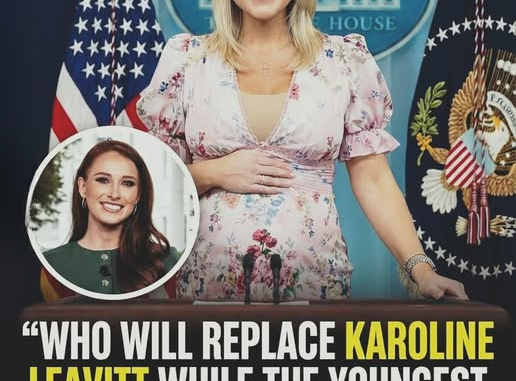
The most straightforward solution lies within the current communications team, which has developed strong expertise and coordination over time.
Team members are well-versed in the fast-paced nature, procedures, and sensitivities involved in daily press briefings. Anna Kelly has emerged as a leading internal candidate to take on temporary leadership responsibilities.
As Principal Deputy Press Secretary, she brings direct experience in preparing briefings, shaping media messaging, and handling rapid-response communications during high-profile political moments.
Her background includes work in Republican campaign communications and roles supporting legislative efforts in the U.S. House of Representatives, giving her a solid understanding of political messaging and media strategy under pressure.
Kelly’s academic training in political management further supports her practical experience. She has built expertise in message discipline, strategic planning, and cross-team coordination, helping ensure alignment with broader administration goals.
Other members of the communications team are also positioned to provide essential support during the transition. Taylor Rogers and Liz Huston, for example, play key roles in media coordination and briefing operations and are highly familiar with day-to-day processes.
Their institutional knowledge helps maintain continuity. By sharing responsibilities, the team can ensure that press briefings, official statements, and social media communications continue without disruption, even without a permanent lead in place.
Beyond the immediate team, several additional names have surfaced in political and media discussions as possible temporary replacements, highlighting the range of expertise available both inside and outside the administration.
Kush Desai is viewed as a potential internal option, given his combined experience in journalism and political communications, which enables him to connect media relations with strategic messaging.
Some external figures have also been mentioned. Katie Pavlich, known for her media experience and understanding of political narratives, has been suggested as a possible temporary spokesperson, though no official decision has been made.
Similarly, Tricia McLaughlin—who has held senior public affairs roles—has been referenced in reports as someone capable of stepping into press duties on an interim basis. These mentions, however, remain speculative rather than confirmed.
It is important to note that individuals discussed in media or political analysis are not officially appointed. Such speculation often stems from their experience, visibility, or previous involvement in similar roles.
The transition is expected to be temporary rather than permanent. Karoline Leavitt has indicated that she plans to return after her maternity leave, ensuring continuity in the administration’s communication strategy.
Her previous return during the 2024 campaign cycle attracted attention, as she resumed her duties after a relatively short leave—demonstrating her commitment to balancing personal and professional responsibilities.
While the exact length of her upcoming leave has not been confirmed, her long-term position within the administration is widely seen as stable, reflecting careful planning in staffing decisions.
Situations like this highlight how key government functions are designed for resilience. Press operations depend on coordinated teams rather than a single individual, allowing responsibilities to be redistributed smoothly when needed.