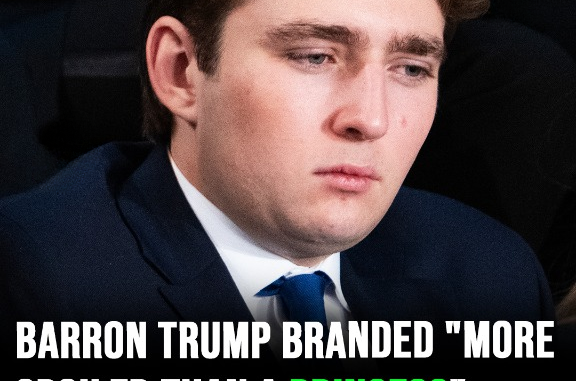
As the conflict in Iran stretches into its second month, public attention has shifted from the battlefield to the personal lives of the First Family. Amid ongoing hostilities, growing pressure has focused on Donald Trump’s youngest son, Barron Trump. What began as a viral social media trend has exploded into mainstream debate, with commentators questioning the 20-year-old’s sense of “patriotism” and willingness to serve.
The controversy intensified after segments on major news networks. On The Last Word, host Lawrence O’Donnell criticized Barron’s lack of military involvement, contrasting his privileged upbringing with historical examples of youth serving during wartime. O’Donnell cited President Franklin D. Roosevelt’s four sons, all of whom served in World War II, and Princess Elizabeth, who took on mechanic and driver duties during the same conflict.
Critics have highlighted issues of privilege, pointing to Barron’s towering height of 6’7” as symbolic of his insulated upbringing. O’Donnell quipped that Barron was “more spoiled than a princess,” sparking viral conversations online. Hashtags such as #SendBarron have circulated widely, reflecting public frustration over political elites appearing removed from the sacrifices faced by ordinary Americans. Many argue that seeing a Trump in uniform would signal solidarity with troops, while others mocked the contrast between the President’s leisure and the nation’s wartime responsibilities.
Yet whether Barron could actually serve remains a technical question. According to U.S. selective service regulations, men turning 20 in the calendar year of a draft lottery are eligible for conscription. While Barron meets the age requirement, his extreme height presents a potential barrier. At 6’7”, he approaches the Army’s height limit of 6’8” for many roles, including tanks, armored vehicles, and fighter jets. Though not automatically disqualified, his stature may make him incompatible with certain positions.
Supporters of the First Family argue that Barron is unfairly targeted, a private citizen being scrutinized for his father’s policies. They emphasize that his age, student status, and height should not make him a political pawn. Critics, however, insist that in times of national sacrifice, no family should be exempt from the expectations of service.
As the war in the Middle East continues to dominate headlines, the debate over Barron Trump’s potential role has become a flashpoint, highlighting broader tensions between the American public and its leadership. Whether the conversation is symbolic or substantive, it underscores how the personal lives of prominent figures can quickly become intertwined with national security debates.