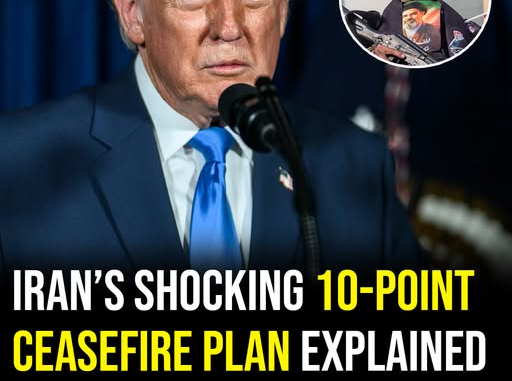
Donald Trump described Iran’s ten-point proposal as a “workable foundation for negotiations.” However, as more details of the plan surfaced, several analysts responded with surprise and skepticism.
“It appears that Trump has made major concessions,” said Mark Stone.
Just an hour before Trump’s deadline
Tuesday began with Trump warning that an entire civilization of 90 million Iranians could face destruction.
Yet shortly afterward, the United States and Iran agreed to a temporary two-week ceasefire—less than an hour before Trump’s deadline to intensify military action expired.
According to Axios journalist Barak Ravid, Pakistan played a significant role in the negotiations. He noted that Egypt helped bring both sides closer together behind the scenes, while Turkey also contributed to facilitating discussions.
At the same time, The New York Times, citing Iranian sources, reported that China intervened at the last moment, urging Tehran to ease tensions due to the global economic risks tied to the conflict.
According to the White House, Israel also agreed to the pause. Announcing the decision to halt further strikes, Trump said Iran had submitted a 10-point proposal, calling it a viable basis for talks.
The ceasefire represents a fragile diplomatic step forward after days of missile and drone exchanges across the Middle East. Negotiations are expected to continue in Islamabad, following mediation efforts by Pakistani Prime Minister Shehbaz Sharif.
What’s included in Iran’s proposal?
According to Iranian state media, Tehran has made it clear that ending the war depends on finalizing the terms of a 10-point peace plan reportedly delivered to Washington through Pakistani intermediaries. The proposal includes several conditions historically rejected by the United States.
Although not officially confirmed in full, Iranian outlets claim the plan includes major demands such as:
- A non-aggression pact between the U.S. and Iran
- Continued Iranian control over the Strait of Hormuz
- Recognition of Iran’s nuclear enrichment rights
- Removal of all primary U.S. sanctions
- Removal of secondary sanctions affecting other countries
- Cancellation of all UN Security Council resolutions against Iran
- Cancellation of resolutions by the International Atomic Energy Agency
- Compensation payments to Iran for damages
- Withdrawal of U.S. military forces from the region
- An end to conflicts involving Iran-backed groups such as Hezbollah in Lebanon
The proposal also links a ceasefire to reopening the Strait of Hormuz and restoring oil flow.
At the center of the agreement is the Strait of Hormuz, a vital global oil route. Iran has agreed to allow regulated passage through the strait for two weeks, a significant step given that about 20% of the world’s oil passes through it. In exchange, the U.S. has paused offensive actions, including plans to expand strikes on Iranian infrastructure.
Following the announcement, the White House described the ceasefire as a major achievement for Washington.
Press Secretary Karoline Leavitt stated that Operation Epic Fury met its objectives in just 38 days—well ahead of schedule.
“This is a victory for the United States made possible by President Trump and our military,” she said.
She added that the operation, originally expected to last four to six weeks, exceeded its core goals within 38 days.
“A complete victory”
The two-week pause in hostilities has been interpreted by Mark Stone as a significant concession by Trump.
Stone suggested that Trump has effectively delayed the situation, giving Iran a strategic advantage. He briefly spoke with Trump by phone after the announcement.
Trump reportedly said, “I haven’t got long, be quick,” before describing the situation as “great… very good.”
He characterized the military campaign as entirely successful, calling it “a complete victory” both militarily and in broader terms.
“The level of incompetence is stunning”
Not everyone views the ceasefire as a success for the White House. The agreement has sparked mixed reactions shaped by the strong opinions Trump often generates.
Some critics even labeled it another “TACO” moment—short for “Trump Always Chickens Out.”
Democratic lawmakers responded with both relief and criticism.
Senator Ruben Gallego said, “Ending war is positive. I’m relieved our troops are no longer in danger, even as we continue to question how this conflict began.”
Senator Chris Murphy described Iran’s control over the Strait of Hormuz as a “historic victory” for Tehran, adding that “the level of incompetence is shocking.”
Senator Ed Markey also welcomed the ceasefire but criticized the conflict itself, stating that the U.S. should not have been involved and calling for congressional action to end the war.