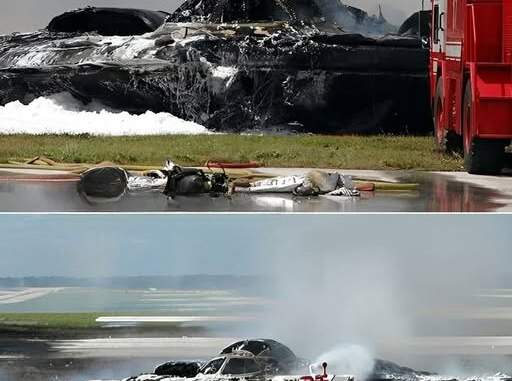
A profound sense of shock has settled over the Pacific following a devastating incident at Andersen Air Force Base in Guam. Early accounts indicate that a B-2 Spirit stealth bomber—one of the most advanced and strategically vital aircraft in the U.S. arsenal—crashed and erupted into flames shortly after takeoff. The dramatic image of the iconic flying-wing aircraft ablaze on the runway has sent ripples through military and aviation communities alike, underscoring the inherent risks even in routine operations.
The B-2 Spirit has long symbolized cutting-edge stealth technology. Developed during the final years of the Cold War, it was engineered to penetrate the world’s most sophisticated air defense systems. Its distinctive bat-like design reflects decades of research into low-observable capabilities, allowing it to evade radar detection. Yet this very sophistication demands extraordinary mechanical precision and environmental stability. Although officials have not released specific details about the cause, reports suggest the incident unfolded rapidly, with the aircraft encountering trouble moments after liftoff and crashing within the runway environment. Emergency crews at Andersen responded immediately to contain the intense blaze and secure the area.
For personnel stationed at Andersen, the loss strikes deeply. The base plays a pivotal role in U.S. Indo-Pacific operations, and the presence of the B-2 fleet is central to America’s strategic deterrence in the region. Witnessing such a critical asset destroyed at a key forward base is a sobering moment for Air Force Global Strike Command. First responders were commended for their swift action in controlling the fire and safeguarding nearby facilities.
While the financial impact of losing a multi-billion-dollar aircraft is immense, military leadership’s immediate concern centers on the crew. Each B-2 is flown by a two-person team, and in high-risk emergencies, survival hinges on rapid decision-making and reliable ejection systems. Updates regarding the pilots’ condition are still pending. Within the close-knit community of stealth bomber aviators—an elite group numbering only a few hundred over the aircraft’s history—the well-being of these airmen remains paramount.
Strategically, the consequences are significant. The B-2 fleet is notably limited. Originally planned for over 100 aircraft, production ultimately stopped at just 21 due to shifting geopolitical realities and soaring costs. After a 2008 crash at the same base reduced the total to 20, this latest event could bring the number down even further. With production lines long since closed, each aircraft is effectively irreplaceable. The loss represents not only equipment but also a measurable reduction in long-range stealth strike capability.
Although the forthcoming B-21 Raider is intended to assume the Spirit’s role in the future, it remains in early stages of deployment. For now, the B-2 continues to serve as a cornerstone of U.S. strategic deterrence. This reality heightens the stakes of the investigation.
A formal Safety Investigation Board will now begin a detailed examination of the wreckage, flight data, and maintenance records. Investigators will explore numerous possibilities—from mechanical malfunction to environmental factors unique to Guam’s tropical climate. As a precaution, the remaining fleet may undergo extensive inspections while officials determine whether the incident reflects an isolated event or a broader concern.
Beyond financial considerations—estimated at roughly $2 billion per aircraft—the loss impacts readiness and operational tempo. Years of maintenance effort, specialized infrastructure to protect stealth coatings, and extensive training investments are gone in a single moment.
At Andersen Air Force Base, the mood has shifted from routine operations to reflection and resilience. The base’s long association with bomber missions has made the B-2’s presence a symbol of strength. Today, that symbol carries a somber weight.
The B-2 Spirit has always represented the outer limits of aerospace innovation. Its futuristic silhouette and technological ambition remain defining traits. This tragic event serves as a stark reminder that even the most advanced machines operate within unforgiving physical realities. As further details emerge from the Department of the Air Force and Global Strike Command, attention will remain fixed on both the investigation’s findings and the path forward for America’s stealth bomber fleet.