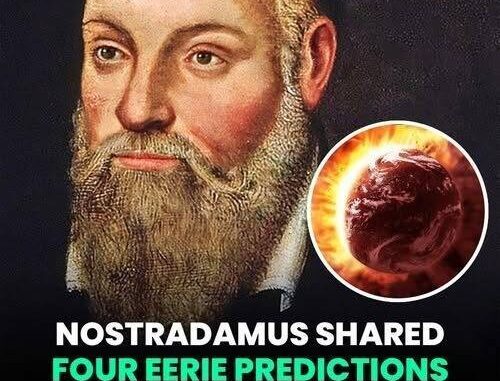
For centuries, the writings attributed to Nostradamus have existed at the boundary between belief and interpretation, with each generation finding its own concerns mirrored in his obscure verses. His four-line prophecies, composed in layered and often vague language, tend to gain new relevance whenever uncertainty rises in the world. During periods of conflict, environmental challenges, or political strain, references to long wars or ruined cities can feel familiar—not because they clearly foresee events, but because they reflect recurring human anxieties throughout history.
The associations people make—whether with past disasters or current global issues—often reveal more about human nature than about the text itself. In uncertain times, people instinctively search for patterns and meaning, seeking order rather than randomness. Nostradamus’s writings, open to multiple interpretations, become a kind of surface onto which individuals project their own worries. Lines that once seemed unclear can appear more concrete when viewed through the context of present-day concerns.
The imagery found in his verses—sudden conflict, natural catastrophes, and unexpected loss—can resemble scenes reported in modern news. However, this resemblance is less about accurate prediction and more about enduring themes. Every era has experienced moments of instability and has looked for ways to understand what might come next. His work resonates because it captures a universal condition: living with uncertainty in a world that can shift rapidly and without warning.
Ultimately, Nostradamus’s lasting significance may lie less in forecasting the future and more in reflecting the mindset of those who read him. His verses echo the ongoing human desire for meaning, reassurance, and understanding. Rather than delivering definitive answers, they demonstrate how strongly people seek patterns in uncertainty—and how that instinct continues to persist, even centuries later.