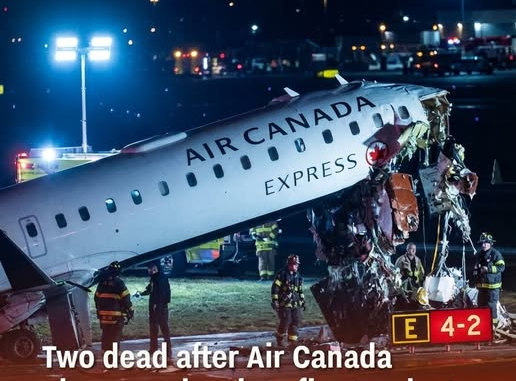
A routine flight arrival turned into a tragic event late Sunday night when an Air Canada Express aircraft collided with a fire truck at LaGuardia Airport. What should have been the conclusion of an ordinary trip instead became a scene of disruption and urgent emergency response. As more information emerged, authorities confirmed the severity of the incident, drawing widespread attention and prompting immediate examination by aviation officials.
The aircraft, operated by Jazz Aviation, had flown in from Montreal and was taxiing on the runway around 11:40 p.m. when the collision took place. Initial reports suggest the plane was moving at a relatively slow speed—approximately 24 to 30 miles per hour—when it struck a fire truck that was responding to a separate situation nearby. The involvement of emergency vehicles within an active movement zone has introduced additional complexity to the investigation, particularly regarding coordination and communication.
Officials later confirmed that two crew members lost their lives, while multiple passengers were injured, with conditions ranging from minor to severe. Dozens of individuals were assessed at the scene, and several were transported to nearby hospitals for further treatment. Personnel inside the fire truck were also injured and required medical attention. The incident has had a significant human impact, affecting passengers, responders, and the wider aviation community.
The investigation is being conducted by the National Transportation Safety Board, which will review air traffic control communications, ground movement records, and operational procedures. In the aftermath, LaGuardia Airport experienced temporary shutdowns and extensive delays that impacted hundreds of travelers. As investigators work to reconstruct the sequence of events, the primary objective is to identify any breakdowns, improve safety measures, and reduce the likelihood of similar incidents occurring in the future.