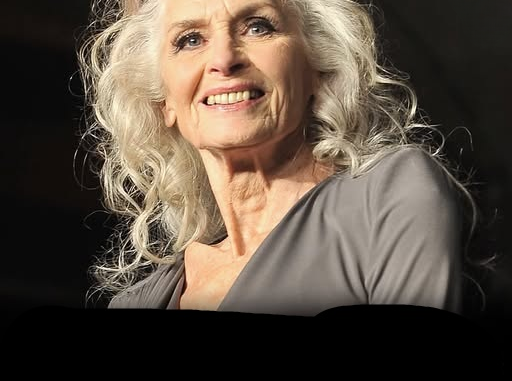
They had already decided her value—measured by youth, smooth skin, and how easily she could be overlooked. Daphne Selfe never contested these assumptions out loud. She simply outlasted them. Her life moved from working behind a department store counter to marriage, motherhood, and the quiet anonymity often expected of women once the spotlight fades. Yet when widowhood arrived, she didn’t retreat—she returned, not as a reinvention, but as herself: spirited, unapologetic, and embracing the lines that told her story.
Fashion tried to frame her as an exception, a novelty in an industry obsessed with erasing time. She refused the label. At London Fashion Week in her seventies, she carried none of the urgency of seeking approval. Instead, she exuded ease and a playful delight in proving that elegance doesn’t expire. She didn’t compete with youth—she simply ignored the idea that she should, quietly transforming the narrative from “still relevant” to “never needed permission.”
Her impact came not just from being seen, but from refusing to conform. She never hid her age, softened her grief, or pretended glamour was untouched by life. She showed up fully, with history and honesty intact—far more compelling than any illusion of perfection. While the industry might celebrate her as rare, she understood the truth: aging itself isn’t rare—choosing to be visible while aging is.
Beyond her own presence, she lifted others. Through mentorship, visibility, and persistence, she opened doors for women told theirs were closed. What began as a personal comeback became a quiet challenge to the notion that time diminishes value. In Daphne Selfe’s world, it only deepened it.