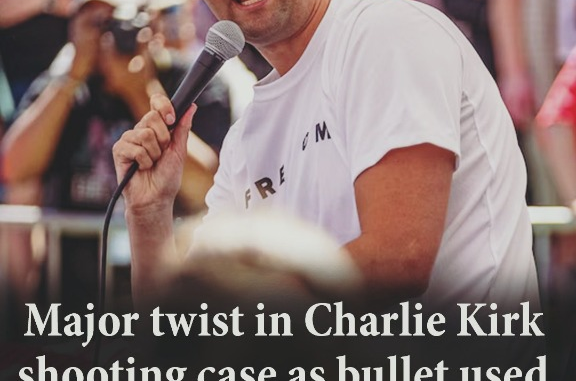
New developments in the Charlie Kirk murder case have cast doubt on key forensic evidence, particularly whether the bullet recovered at autopsy can be definitively linked to Tyler Robinson’s alleged firearm.
Tyler Robinson, 22, faces capital murder charges in connection with the fatal shooting at Utah Valley University on September 10, when Kirk was shot in the neck. The incident shocked the campus community and the state.
Court filings indicate that forensic analysis may not conclusively connect the bullet to Robinson’s rifle, potentially weakening the prosecution’s case. The shooting reportedly occurred from a rooftop roughly 410 feet away, after which Robinson fled. Authorities conducted a multi-agency manhunt, and Robinson surrendered 36 hours later.
Prosecutors claim Robinson traveled to Utah Valley University with the intent to kill Kirk, a narrative supported by statements from Robinson’s family and law enforcement. Robinson’s father reportedly identified the rifle used in the crime, which became key evidence linking him to the incident.
Court documents include messages allegedly sent by Robinson to his partner, Lance Twiggs, describing efforts to retrieve the rifle and avoid leaving evidence behind. He reportedly expressed concern over leaving fingerprints and instructed Twiggs to delete their messages, suggesting awareness of possible law enforcement scrutiny.
The filings also note that Robinson confessed to his father, who contacted authorities, leading to his arrest and formal charges.
Defense attorneys argue that the Bureau of Alcohol, Tobacco, Firearms and Explosives (ATF) was “unable to identify the bullet recovered at autopsy to the rifle allegedly tied to Mr. Robinson,” raising questions about the strength of ballistic evidence. They plan to introduce expert testimony challenging the connection between the bullet and the firearm, which could significantly impact the case.
The defense has requested a six-month delay for the preliminary hearing to review extensive forensic and scientific evidence, including complex DNA analysis involving multiple contributors. They have received around 20,000 discovery files, including audio, video, and written materials, requiring hundreds of hours to examine.
Court filings emphasize the complexity of verifying DNA profiles, firearm identification, and chain of custody. The defense argues that without definitive forensic links, circumstantial evidence and messages alone may be insufficient to prove guilt beyond a reasonable doubt.
Prosecutors maintain that Robinson acted with premeditation, citing digital communications, eyewitness accounts, and the rifle identification. However, the defense contends that forensic uncertainty must be resolved to uphold due process.
Robinson is scheduled to appear in court on April 17, where the judge will consider motions regarding the requested hearing delay and other procedural matters. The outcome could affect case timelines, trial preparation, and the admissibility of critical evidence.
The case highlights the intersection of forensic science, digital evidence, and criminal intent in modern investigations. Legal experts note that high-profile trials like this require meticulous review of ballistic, DNA, and digital evidence to ensure accurate interpretation and fair proceedings.
Robinson remains in custody while his defense team continues to consult experts, evaluate evidence, and prepare motions addressing the reliability and interpretation of forensic findings. The case underscores the importance of thorough scientific validation in establishing guilt in capital murder trials.
In summary, while the prosecution emphasizes premeditation and intent, the defense argues that the inability to conclusively link the bullet to Robinson’s rifle introduces reasonable doubt, emphasizing the critical role of forensic verification in the legal process.