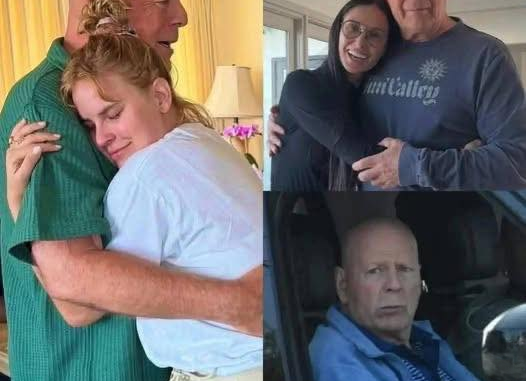
For many years, Bruce Willis was seen as the embodiment of strength on screen—an actor whose presence shaped action films, blended intensity with humor, and created unforgettable roles. Whether in high-stakes scenes or lighter moments, he carried a confidence audiences instantly recognized.
In recent years, however, the focus has shifted away from his performances to something far more personal—and far more challenging.
After stepping away from acting, his absence prompted questions. Fans noticed, but the reason wasn’t immediately clear. Then, in 2022, his family shared the news that brought understanding.
He had been diagnosed with Aphasia—a condition that affects communication, including speaking, understanding, and processing language.
That announcement changed everything.
What once seemed like a quiet retirement became a deeper reality: a serious health condition reshaping his daily life.
From the start, his family chose transparency.
Instead of allowing speculation, they addressed the public directly, offering updates that balanced honesty with privacy. His daughter, Rumer Willis, became one of the key voices sharing this journey with the public.
Her message centered on gratitude.
She expressed deep appreciation for the overwhelming support—messages, memories, and stories from fans who had grown up watching him and felt a personal connection to his work.
But alongside that gratitude came more difficult news.
Over time, his condition progressed, leading to a more specific diagnosis: Frontotemporal dementia.
This condition affects areas of the brain responsible for behavior, personality, and language. Unlike other forms of dementia that initially impact memory, it often changes communication and emotional expression more directly.
For someone whose career relied so heavily on voice, timing, and presence, the impact is profound.
Yet this story is not only about loss.
It is also about resilience.
And connection.
Since the diagnosis, his family—including his wife, children, and former partner Demi Moore—has remained closely united around him. Their support reflects a bond that goes beyond traditional definitions of family.
They have chosen not to hide the situation.
Instead, they’ve encouraged understanding.
And that choice matters.
Conditions like frontotemporal dementia are often misunderstood, with unpredictable progression and effects that are difficult to grasp from the outside. By sharing their experience, his family has helped raise awareness—not just of his situation, but of the broader reality many families face.
Behind the public updates, a quieter story continues.
One of daily adjustments.
Of patience.
Of finding strength in new ways.
For those closest to him, this is not a single moment, but an ongoing journey—one that evolves with each passing day.
And perhaps that is why it resonates so deeply.
Because it reflects something universal: how life can change unexpectedly, how roles shift, and how families respond when everything feels uncertain.
The messages from his family haven’t focused solely on what has been lost.
They’ve also emphasized what remains.
Connection.
Support.
Presence.
These are not abstract ideas—they are the foundation of how they continue forward.
Fans, too, have become part of that support system. Through tributes and shared memories, they’ve created a sense of collective care—something meaningful for someone who spent decades entertaining millions.
As updates continue, they remain grounded in honesty.
No dramatization.
No illusion.
Just reality.
And that honesty allows people to better understand the situation—not completely, but enough to see beyond headlines.
Today, the story of Bruce Willis is no longer defined solely by the roles he played.
It’s defined by something quieter.
A transition from performance to presence.
From public spotlight to private resilience.
And within that shift lies something meaningful—not for spectacle, but for what it reveals about illness, family, and the strength people show when life takes an unexpected turn.
Through it all, one message from his family remains unchanged:
Gratitude for the support.
Clarity about the reality.
And a commitment to face the future together.
Because no matter how much has changed, one thing hasn’t—
He is not facing it alone.