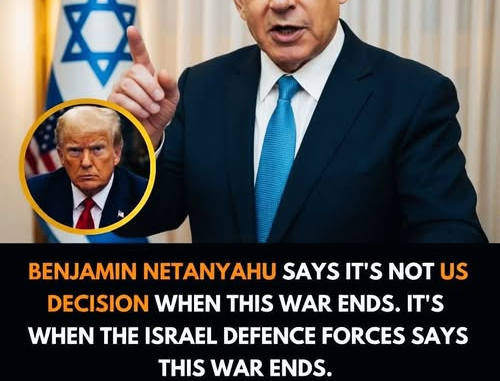
A recent declaration by Benjamin Netanyahu has sparked extensive discussion regarding national sovereignty and the interplay between close allies during times of conflict.
Addressing the ongoing situation, Netanyahu stressed that decisions about the duration and conduct of the war would be made by Israel itself, specifically the Israel Defense Forces (IDF), rather than external partners. His comments highlighted a firm commitment to retaining full control over military strategy and national security priorities.
The statement quickly attracted international attention, appearing to mark the limits of influence even among long-standing allies such as the United States. Analysts observe that while cooperation remains strong, crises often compel nations to act independently to safeguard their core interests.
Some experts interpret the remarks as indicative of broader geopolitical tensions, where alliances are challenged by differing objectives and approaches. Others see it as a routine assertion of sovereignty, common among nations confronting high-stakes security challenges.
The comments have also sparked a wider discussion about leadership in times of conflict. As global tensions continue to shift, questions persist about how much international partnerships can influence decision-making when national interests are paramount.
Whether viewed as a strategic move or a diplomatic signal, Netanyahu’s statement has added another dimension to ongoing debates about power, influence, and independence in international relations.