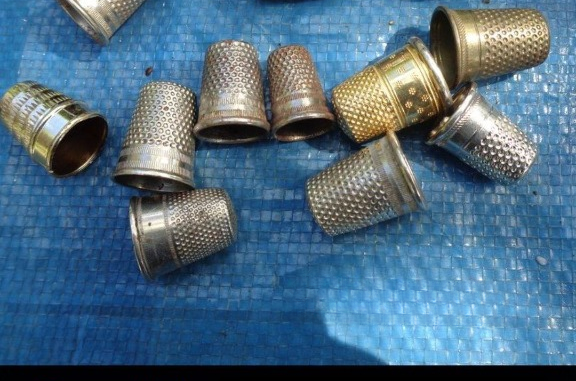
A thimble may be small, but it plays an essential role in hand sewing. Worn on the finger—usually the middle finger or sometimes the thumb—it protects the skin while helping push a needle through fabric. This added protection not only prevents painful pricks but also makes it easier to apply consistent pressure, especially when working with thicker materials or multiple layers. With a thimble, stitching becomes smoother, safer, and more controlled.
Thimbles come in a variety of styles and materials, blending function with design. Some are plain and smooth, while others feature textured surfaces like dimples or ridges to keep the needle from slipping. Early thimbles were often made from leather, but today metal versions are the most common. There are also plastic and resin options, which are lightweight and budget-friendly. The word “thimble” is believed to have originated from “thumb-bell,” referencing early versions that were worn on the thumb.
This simple tool has a long and fascinating history. Archaeological evidence shows that ancient cultures, including those in China and the Roman Empire, crafted thimbles from bone, bronze, and even ivory. By the 16th and 17th centuries in Europe, thimbles became more refined and were sometimes made from precious metals like silver and gold. These decorative pieces were often valued as keepsakes and passed down through generations.
Today, different types of thimbles suit different sewing needs. Closed-top thimbles fully protect the fingertip and are great for general use. Open-top designs allow more flexibility and are ideal for those with longer nails. Soft leather thimbles offer comfort during long sewing sessions, while adjustable ring thimbles are popular among quilters. No matter the type, the purpose remains the same: to make sewing easier, safer, and more precise with every stitch.