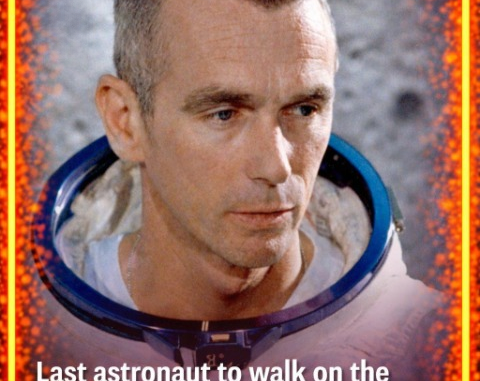
The last human to walk on the Moon, Eugene Cernan, departed its surface in 1972, and ever since, one question has persisted: why hasn’t humanity returned? According to former NASA administrator Jim Bridenstine, the issue is not technological ability. The necessary tools and advancements have existed for years, and in many respects, they have become even more sophisticated. The real challenge, he argues, has been long-term commitment—something difficult to maintain amid shifting political agendas, funding debates, and the inherent risks of space travel.
Space exploration has always depended as much on sustained determination as on engineering breakthroughs. Missions take many years, sometimes decades, to design and execute, requiring steady investment and public backing across multiple administrations. Without that continuity, even highly ambitious programs can lose momentum or be delayed indefinitely. As a result, much of human spaceflight activity over the past several decades has remained in Earth orbit or focused on robotic missions rather than renewed lunar exploration.
That situation may be beginning to shift with Artemis II, a mission intended to send astronauts around the Moon for the first time in more than 50 years. The crew is not only made up of highly trained astronauts but also represents a broader international collaboration, including a Canadian participant. Each member brings personal meaning into the mission, carrying symbolic items or mementos that connect them to Earth and loved ones.
Where earlier decades were marked by pauses and uncertainty, Artemis reflects a renewed push toward sustained exploration. Returning to the Moon is not simply about repeating history—it is about establishing a foundation for future deep-space missions, including eventual journeys to Mars. Whether this marks a lasting turning point will depend on the same factor that shaped the past: consistent commitment over time. For now, the path back to the Moon is clearer than it has been in generations.