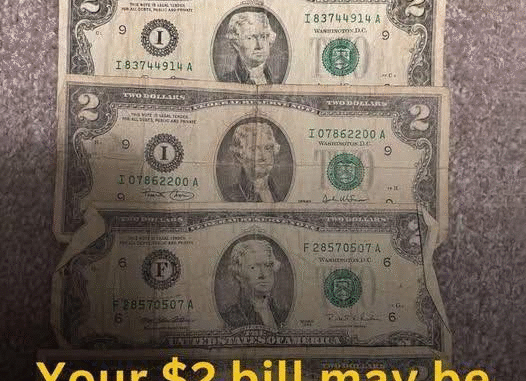
For years, the $2 bill has carried a strange mix of superstition and misunderstanding. Some claimed it brought bad luck or was cursed, while others simply ignored it. In reality, these bills aren’t unlucky at all — and some can be worth far more than their face value, sometimes hundreds or even thousands of dollars.
The $2 bill was never discontinued or rare; it just fell out of common use. Initially issued to simplify transactions, it was often considered awkward or unnecessary. Over time, superstitions and myths developed, making it seem unusual or even ominous. Ironically, that rarity of use is what makes it appealing to collectors: bills kept in drawers, envelopes, or cards over decades often remain in pristine condition — exactly what increases value.
Not all $2 bills are worth a fortune, but collectors pay a premium for crisp notes, unusual serial numbers, or older bills from the 20th century with colored seals. Some 19th-century oversized notes and printing errors are especially prized. Even modern bills can fetch more than face value if they’re well-preserved or have unique serials.
The $2 bill is still produced, but limited distribution and public unfamiliarity make it seem rare. Its historical significance — including the depiction of the Declaration of Independence on the back — adds to its charm. Many people collect or save these bills, keeping them out of circulation and feeding the myth of rarity.
Ultimately, the $2 bill is a mix of history, superstition, and overlooked value. If you find one in your wallet or drawer, check its year, seal, and serial number — you might be holding a surprising treasure.