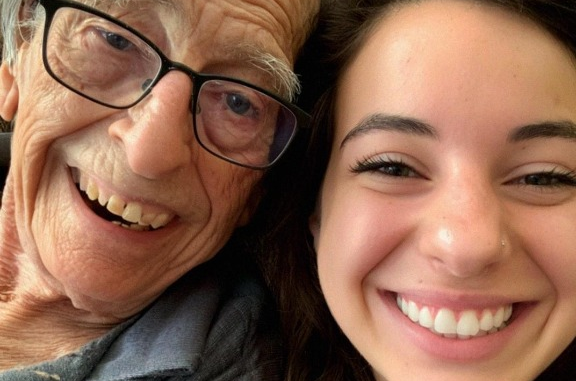
I was six when a drunk driver killed my parents. In the chaos that followed — police, relatives arguing, people debating foster care — I felt like everything safe in my life was slipping away.
Then my grandfather stepped in.
He was sixty-five, tired, and not in the best shape, but he slammed his hand on the table and ended the discussion: “She’s coming with me.”
From that moment on, he was my home.
He gave me his bedroom, learned to braid my hair, packed crooked lunches, and never missed a school event, no matter how much pain he was in. He wasn’t just my grandparent — he became the parent I lost.
We lived with almost nothing. Money was always tight, and every extra thing I asked for ended with, “We can’t afford that, kiddo.” I hated it, even though I knew he loved me more than anything.
Eventually, his health declined. He brushed it off, but the coughing and weakness got worse. We couldn’t afford proper care, so I became his caregiver, balancing homework with helping him through each day. One night he grabbed my wrist as if he wanted to tell me something important, but he was too tired. We both said, “Later.”
Later never came.
He died three days after my high school graduation. Losing him felt like the ground had vanished under my feet. And soon, the bills started coming. I expected debt — maybe the reason we’d struggled all those years.
Then the bank called.
When I went in, the representative looked at me gently and said, “Your grandfather didn’t owe anything. He was one of our most disciplined savers.”
I couldn’t understand. We’d barely scraped by. She explained:
He had opened a restricted education trust the day he took me in and had been depositing money into it every month for eighteen years. Every “no” he ever gave me wasn’t because he didn’t want me to have things — it was because he wanted me to have a future.
Then she handed me a letter from him.
In his shaky handwriting, he told me he was sorry he couldn’t walk me onto a college campus himself, that he knew he’d said no more than I liked, and that “every no built this yes.” The house was mine. The bills were covered for a while. The trust would pay for four full years of school — with money left over.
I cried right there in the office.
He had been planning for my life long after he was gone.
I applied to the best social work program in the state, got accepted, and stood on the porch that night looking at the sky.
“I’m going, Grandpa,” I whispered. “I’ll help others the way you helped me.”
He raised me out of nothing and built a future he never got to see. His secret wasn’t a burden — it was love disguised as sacrifice.
He was my hero then, and he still is now.