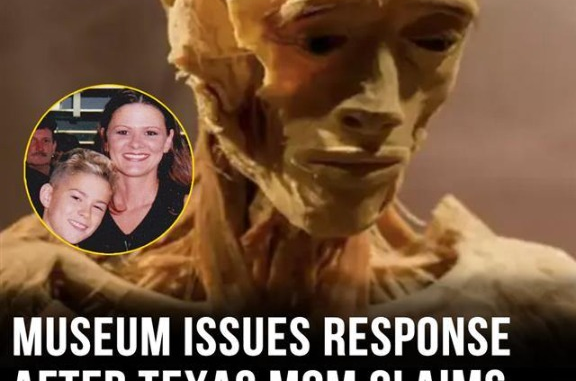
The Las Vegas Real Bodies exhibit was meant to be educational—a quiet place to study anatomy. But for Texas mother Kim Erick, it became a nightmare. What others saw as a plastinated model, she believed was her son Chris, skinned and displayed for the public.
Chris died in 2012 at age 23, reportedly from two heart attacks caused by an undiagnosed condition. His father and grandmother handled the cremation immediately, leaving Kim with only a small necklace of ashes. From the beginning, the process felt rushed, and police photos showing bruises on his arms left her with lingering doubts. Even after a 2014 homicide investigation confirmed his death as natural, she felt something was being overlooked.
Everything changed in 2018 when she visited the Real Bodies exhibit. One figure—“The Thinker”—stopped her in her tracks. She was convinced the skull fracture, body shape, and a missing patch of skin where her son had a tattoo all matched Chris. She demanded DNA testing, but the exhibit refused, stating the body came from China and had been preserved years before Chris died. They showed documents proving the piece was created in 2004.
Still, Kim remained unconvinced. Her suspicion only grew when “The Thinker” was quietly removed from the exhibit shortly afterward, with no update about where it went. In her mind, the disappearance looked like evidence of a cover-up.
Authorities and museum officials maintain their stance: the timeline makes it impossible for the body to be Chris. The exhibit insists all specimens were obtained legally and ethically. But Kim’s belief goes beyond the paperwork. She feels the official answers have never fully addressed her concerns, and the resemblance she saw was too exact to dismiss.
Her story resurfaces online every few years, sparking debate about grief, perception, transparency, and how institutions should respond when a grieving parent demands answers they can’t provide.
Kim says she won’t stop until she’s certain of what happened to her son. For her, this fight is about truth and closure—not just a body in an exhibit.
The museum has documentation.
Kim has a mother’s conviction.
And for her, the story is far from over.