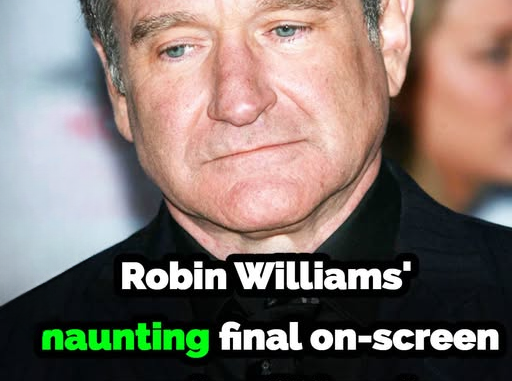
Robin Williams’ name has long been associated with joy, boundless creativity, and extraordinary talent. From his electrifying stand-up performances to his deeply moving film roles, Williams captivated audiences across generations. Iconic films such as Good Will Hunting, Dead Poets Society, Mrs. Doubtfire, and Jumanji highlight just a fraction of the range and emotional depth he brought to his craft. Few entertainers could blend humor and humanity with the same ease, creating moments that were both hilarious and profoundly heartfelt.
Yet behind the charisma and contagious energy, Williams faced private battles few knew about. His death on August 11, 2014, shocked the world. While many initially believed his passing was connected only to depression and past addiction issues, later insights revealed a far more complicated reality.
Following his death, an autopsy revealed that Williams had been living with severe Lewy body dementia—a fast-moving and aggressive neurological disease that impacts cognition, movement, behavior, and mood. In a 2021 interview with The Guardian, his wife, Susan Schneider Williams, recalled what doctors told her:
“After the autopsy, the doctors asked if I was surprised he had Lewy bodies throughout his brain and brain stem. I didn’t even know what Lewy bodies were, but I said, ‘No, I’m not surprised.’ It explained everything.”
Lewy body dementia is the second most common form of degenerative dementia after Alzheimer’s, but it is especially brutal in how quickly and unpredictably it progresses. Dr. Bruce Miller of UCSF’s Memory and Aging Center said Williams’ case was among the most severe he had ever encountered:
“Lewy body dementia is devastating. It moves fast and affects everything. His case was one of the worst I’ve ever seen. It amazed me he could still walk or move at all.”
Although Williams had weathered personal challenges throughout his life, this disease brought confusion and fear he struggled to make sense of. His wife later shared how desperately he wanted clarity:
“Robin knew something else was going on. He told me, ‘I just want to reboot my brain.’ I promised him we would figure it out—I just didn’t know the answers would come after he was gone.”
Lewy body dementia slowly unraveled the sharpness, creativity, and emotional steadiness that had defined him. Outwardly he remained the warm, quick-witted performer audiences adored, but privately he was grappling with changes he could neither understand nor control.
Despite his worsening condition, Williams continued to act, leaving behind a final handful of touching performances. In Night at the Museum: Secret of the Tomb, where he once again played Teddy Roosevelt, his last line became heartbreakingly symbolic after his death:
“Smile my boy, it’s sunrise.”
His final live-action film, Boulevard, released after his passing, ended with an even more reflective and somber line—one that many viewers now interpret as painfully expressive of his inner world:
“I drove down a street one night. A street I didn’t know. It’s the way your life goes sometimes. I’ll drive down this one and another. And now, another.”
These closing words have lingered with fans, offering a glimpse of a man whose performances could still touch hearts even as he faced an unimaginable internal struggle. Robin Williams brought immeasurable light to the world, even while navigating a darkness no one could see.