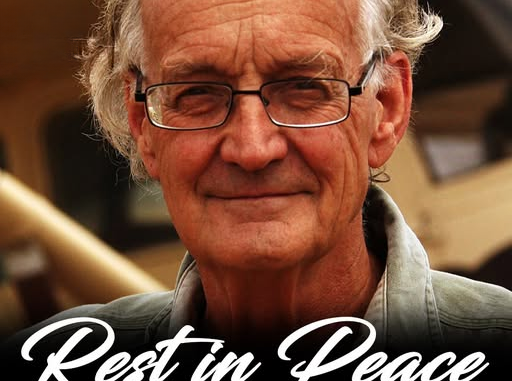
We often grieve celebrities whose faces and names dominate headlines—actors, musicians, and performers. But sometimes, the deepest losses come from those who lived far from the spotlight, quietly changing the world in ways that outlast fame. Iain Douglas-Hamilton was one such person: a scientist whose work didn’t just study elephants—it fundamentally transformed humanity’s understanding of them. He passed away peacefully at 83 in his Nairobi home, leaving behind a legacy that inspired global respect and admiration.
For more than sixty years, Douglas-Hamilton dedicated himself to elephants. He didn’t merely observe them; he revealed their intelligence, emotions, social structures, and decision-making abilities. Before his pioneering work, elephants were seen as anonymous giants—majestic but impersonal. Douglas-Hamilton proved they are sentient beings with personalities, grief, and complex family bonds. His research reshaped scientific knowledge and shifted public attitudes toward poaching, ivory trade, and habitat conservation.
The outpouring of tributes reflected his influence. Prince William, who had worked alongside him in the field, called him a man whose work leaves “lasting impact on our appreciation for, and understanding of, elephants.” Charles Mayhew, founder of Tusk, described him simply as “a true conservation legend.”
Born in Dorset, England, in 1942, Douglas-Hamilton grew up in privilege but was drawn to the wild. After studying zoology and biology in Scotland and Oxford, he moved to Tanzania at 23. At Lake Manyara National Park, he pioneered a revolutionary approach—identifying individual elephants by their ears, tusks, and behavior, treating them as unique creatures rather than faceless herd members.
As his research progressed, Douglas-Hamilton uncovered a devastating truth: elephant populations were collapsing under rampant poaching. He took enormous personal risks to document the crisis, flying aerial surveys over dangerous terrain, facing charging elephants, swarms of bees, and armed poachers. His meticulous data and advocacy played a crucial role in the 1989 global ivory trade ban, a turning point for elephant conservation.
Colleagues like Jane Goodall recognized his transformative influence. In their 2024 documentary A Life Among Elephants, she highlighted his work showing that elephants experience emotions similar to humans. His insights earned him international recognition, yet he remained focused on his mission rather than fame.
In 1993, he founded Save the Elephants, which grew into one of the world’s leading wildlife organizations. Using GPS tracking and careful observation, Douglas-Hamilton demonstrated that elephants navigate, remember migratory routes, and make complex social decisions. His research influenced conservation practices and land management across Africa.
Douglas-Hamilton’s impact extended to global politics, advising leaders such as Barack Obama and Xi Jinping on combating wildlife trafficking. He contributed to landmark agreements restricting ivory sales in the U.S. and China. Few scientists see their work directly shape international policy—but he did.
Despite accolades including the Indianapolis Prize, the Order of the British Empire, and Commander of the British Empire honors, he remained humble. His mission was simple yet vital: protect elephants and teach humans to coexist with them. He often said he hoped for “an ethic developed of human-elephant coexistence,” a goal rooted in necessity rather than idealism.
Douglas-Hamilton is survived by his wife Oria, daughters Saba and Dudu, and six grandchildren. Yet his most lasting legacy is alive and roaming the African continent—elephants whose survival reflects his lifelong commitment.
His life reminds us that one person, guided by patience, courage, and conviction, can alter the fate of an entire species. Iain Douglas-Hamilton may not have been a celebrity, but his impact was monumental, and the world is richer for having witnessed his work among elephants.