After a decade of exhausting fertility treatments, endless doctor visits, and dashed hopes, Megan and Alex were emotionally spent. Hope had become fragile, something to handle carefully, lest it break entirely. Every new test felt like another door closing, another reminder that nature wasn’t bending to their plans. One afternoon, after receiving the worst report yet, they didn’t cry or argue—they simply sat across from each other, holding mugs they never drank from, letting silence stretch between them. Megan admitted she couldn’t endure more medical trials, and Alex squeezed her hand with the steady compassion he had always shown, telling her that giving up on treatments didn’t mean giving up on becoming parents. Adoption, for the first time, felt like freedom instead of defeat.
They plunged into the adoption process immediately. It demanded more from them than any fertility procedure ever had: finances, histories, relationships, and conflict resolution were all examined. Their social worker, Teresa, toured their home and paused at a guest room, suggesting they transform it into a child’s room. “Hope needs a place to land,” she said. They painted it a warm yellow, hung soft curtains, and furnished it carefully—Alex sanding a wooden bedframe himself, Megan filling a bookshelf with picture books. The room felt ready, even if empty.
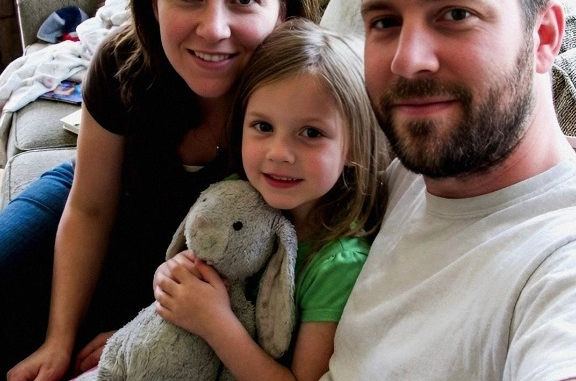
Three months later, they received a call: a quiet six-year-old girl named Lily awaited them. The adoption center buzzed with the energy of other children, but Lily sat alone, clutching a worn gray rabbit, silent and withdrawn. She hadn’t spoken since her mother’s death, and prior families had abandoned attempts to adopt her because of her silence. Megan approached her gently, kneeling and greeting her softly, allowing Lily to exist without pressure. Something clicked. Megan whispered to Alex, “I want her,” and he agreed—they had found their daughter.
Bringing Lily home was a gradual, tender process. She didn’t speak in the car and cautiously explored her yellow room, brushing the bookshelf and testing the reality of her new surroundings. Slowly, trust developed: she let Megan brush her hair, held Alex’s hand on walks, and even slept without clutching her rabbit. A psychologist explained that Lily’s silence was protective, and that words would come when she felt safe. Megan and Alex built a world of gentle routines, quiet presence, and patience.
Six months later, something extraordinary happened. Megan noticed Lily drawing intensely at her art table. Among the pictures was a house—two stories, a tall tree, a window with a dark figure—an exact depiction of the house across the street. Carefully, Megan asked whose house it was. Lily placed her hand on Megan’s cheek—the first deliberate gesture of affection—and whispered her first words in six months: “My mom. My mom lives in that house.”
Curious, Megan crossed the street and knocked. Claire, the woman who answered, looked tired but kind, and bore a striking resemblance to Lily’s birth mother. Seeing the photo Megan showed her, Claire was startled and agreed to meet Lily. She calmly explained she wasn’t her mother but could be a friend. Lily nodded and returned to her drawings. Over time, Claire visited often, gently bridging Lily’s past and her present life.
Lily’s voice returned gradually—first in whispers, then in full sentences. She spoke of her dreams, her rabbit, and her drawings. She stopped staring out the window and crying alone at night. One morning, she climbed into bed between Megan and Alex, whispering, “I love you, Mom and Dad,” before drifting off.
Now seven, Lily thrives in the yellow room full of paintings, books, and glitter glue. A photo of Megan, Alex, Lily, and Claire on the porch is a constant reminder: family isn’t always defined by blood. Sometimes it’s built through patience, trust, and the courage to love a child exactly as she is—even in silence.