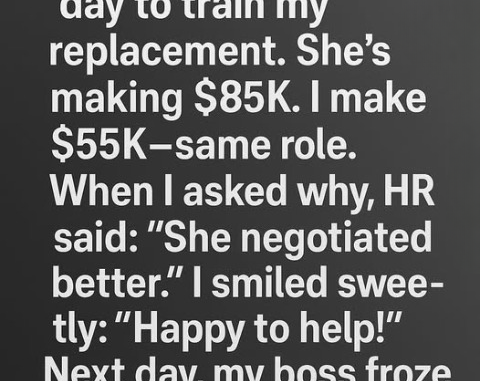
I found out on a Tuesday that I was being replaced. My boss told me I’d be training my successor—no warning, no severance, no apology. Shock made me agree, but my anger simmered quietly.
A day later, I discovered the new hire was making $30,000 more than me for the exact same job. HR’s shrug didn’t help—they blamed me for not negotiating better. That was it. Something inside me snapped.
I trained my replacement—but only by the book. Every hidden task, every extra responsibility I’d quietly handled for years? Gone. I pointed her and management to each problem as it came. Slowly, the realization dawned on everyone: they’d relied on me without valuing me. Clara, my replacement, recognized the unfairness and apologized. I just nodded.
On my last day, I handed in a minimalist resignation and walked out. Deadlines crashed, workflows faltered, and my boss scrambled to handle tasks he’d never noticed before. Meanwhile, I took a new role that valued my worth and even topped Clara’s salary.
The betrayal stung at first, but leaving taught me something stronger: loyalty isn’t enough when it’s one-sided. Standing up for my value didn’t just change my career—it exposed the illusion that they ever appreciated me.