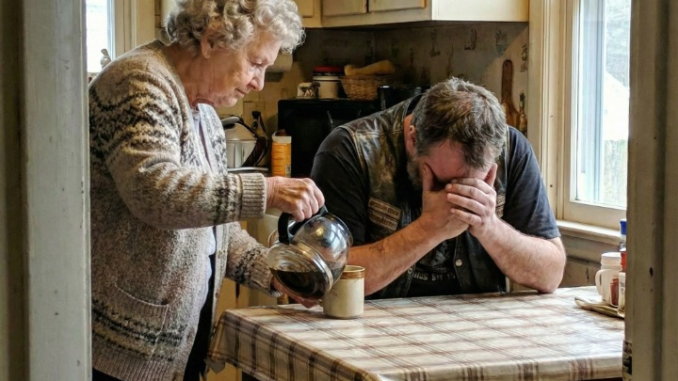
The man who caused my brother’s death comes to my mother’s house every Sunday, and she welcomes him like family. For five years, I’ve watched him sit at our table, drink her coffee, and listen as she talks about the son she lost.
I hated him at first. Hated the sight of him. Hated that he showed up to the funeral, that he cried over a life he helped end. I wanted him gone. My mother stopped me.
“He needs to be here,” she said. “More than you know.”
My brother Marcus ran a red light. The biker, Thomas, had the green. The police were clear—no charges, no fault. Just a tragedy. Still, knowing that didn’t stop my anger.
At the funeral, Thomas collapsed in front of my mother, begging forgiveness. Instead of pushing him away, she held him. She forgave him. She invited him for coffee the following Sunday.
I thought grief had broken her.
But Thomas kept coming. He fixed things around the house. Brought groceries. Listened as my mother shared stories about Marcus. He cried every visit. I refused to be there—until one day I confronted him.
He told me why he came. Because every Sunday, he punished himself by remembering my brother. By hearing how loved he was. By sitting in the house where Marcus grew up. He said forgiveness hurt more than hatred—because he didn’t feel he deserved it.
That day, I learned Marcus’s last words were for our mother. Thomas had been the one holding him. That’s why she forgave him. She couldn’t hate the man who made sure her son didn’t die alone.
Now I understand.
Thomas isn’t replacing my brother. He’s carrying him. He’s family not by blood, but by shared grief and chosen mercy.
My mother says forgiveness isn’t forgetting—it’s choosing love again and again. And every Sunday, she makes that choice.
So do I.
I’ll save him a seat tomorrow.