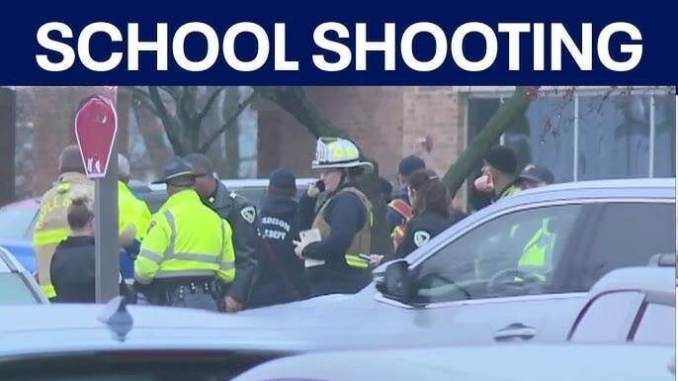
On Saturday, December 13, 2025, a quiet winter day at Brown University was violently disrupted when shots were fired inside the Barus & Holley engineering building. An ordinary academic afternoon instantly descended into panic as students and faculty ran for safety, locked themselves inside rooms, and contacted emergency services. Police and first responders arrived on campus within minutes.
When authorities secured the building, two students were confirmed dead and nine others injured, several in critical condition. Victims were rushed to nearby hospitals, while investigators reported that the shooter had escaped on foot, vanishing into surrounding neighborhoods. The sudden attack left both the university and the city in shock.
Brown University quickly issued emergency alerts and placed the entire campus under lockdown. Students were instructed to shelter in place as police set up security perimeters and searched buildings. Helicopters hovered overhead as worried parents across the country tried desperately to reach their children. All classes, exams, and campus events were canceled as the university moved into emergency response mode.
After the lockdown was lifted, an uneasy silence settled over campus. Memorials of candles, flowers, and handwritten notes appeared, and counseling services were expanded to support those affected. Vigils brought together students, faculty, alumni, and local residents to honor the victims and stand with the wounded.
A large-scale investigation followed, involving Providence police, state officials, and the FBI. Authorities reviewed surveillance footage, interviewed witnesses, and collected forensic evidence. Images of a person of interest were released, along with a $50,000 reward, though no arrests were immediately announced.
The inquiry deepened when investigators examined a potential connection to the killing of an MIT professor in Brookline two days later. While no direct link was confirmed, law enforcement agencies began coordinating across state lines, increasing concern throughout New England’s academic institutions.
Within the Brown community, urgent discussions emerged around campus security, emergency preparedness, and mental health support. Additional safety measures were introduced, town hall meetings were held, and faculty adjusted academic expectations as many students struggled with fear and emotional distress.
As the investigation remains ongoing, the university and city continue the slow process of recovery. Memorials stay in place, classes resume cautiously, and the pursuit of justice moves forward alongside a shared commitment to healing and preventing future violence.