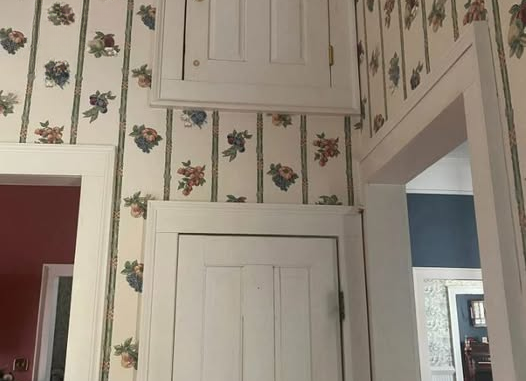
High cabinets—those tiny, hard-to-reach cupboards perched above doors and kitchen walls—might seem like odd relics of old homes, but they were actually clever solutions to practical problems. In smaller houses of the 19th and early 20th centuries, every inch of space mattered. These elevated cabinets stored rarely used items like winter linens, hatboxes, or luggage, keeping main living areas uncluttered. Often custom-built to fit awkward nooks, they reflected the craftsmanship and resourcefulness of the era.
Beyond storage, they sometimes served a financial purpose: tax laws in certain areas taxed large closets, so tiny, high cabinets provided extra space without increasing a home’s assessment. Today, the same principle inspires modern storage solutions—lofted shelves, tall kitchen cabinets, and ceiling-mounted racks—showing that vertical space can double storage without expanding the footprint.
High cabinets also carry historical charm, hinting at the lives of past residents, while psychologically reducing clutter by keeping rarely used items out of sight. They stand as a reminder that smart design is not about more square footage, but about making every inch count—a legacy of ingenuity waiting to be appreciated by today’s homeowners.