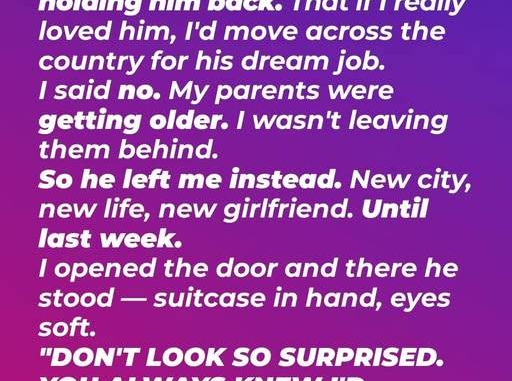
When my husband left because I refused to uproot my life for his dream job across the country, I felt like a chapter of my life had ended. At the time, it was painful, raw, and deeply personal. His name was Stan, and we’d been together since high school—a relationship everyone assumed would last forever. We married young, grew up together, and appeared stable from the outside. But “forever” only works when both people want the same future—and we didn’t.
Stan always craved more: more excitement, more recognition, proof he hadn’t settled too soon. I, on the other hand, was grounded. My aging parents needed my care, and I couldn’t abandon them. When Stan got a high-paying tech job in Seattle, he framed it as destiny—a once-in-a-lifetime opportunity. For him, it demanded everything. For me, it was a crossroads.
He didn’t ask; he presented an ultimatum: move with him or accept the end of our marriage. I asked for compromise, time, a plan—he offered none. I chose family, stability, and my own values. He chose ambition and walked out, even draining our joint savings. His betrayal was both emotional and financial, leaving years of planning shattered overnight.
The divorce was messy. Stan didn’t just leave; he flaunted his new life online—new city, new partner, carefully curated success. Meanwhile, I rebuilt my life from scratch. Freelance work, caregiving, hospital visits—it was a grind of quiet resilience and constant exhaustion.
Healing came slowly. I relearned independence, finding joy in small victories: paying bills on time, laughing with my parents, sipping coffee alone on a quiet morning. Over time, survival turned into freedom.
Then, one rainy afternoon, life surprised me. There was a hesitant knock at the door—Stan, soaked and looking smaller than I remembered, with a suitcase. He smiled, assuming I’d welcome him back.
Behind me stood James.
James wasn’t just any man—he was my husband now, steady, calm, and the divorce attorney Stan had mocked during the proceedings. James had exposed Stan’s hidden assets, helping me regain stability, renovate our home, and start a nonprofit for seniors. His support had given me peace, not luxury or revenge.
Stan tried to explain himself: failed job, loneliness, mistakes, second chances. He asked if we could try again.
I shut the door gently. “You didn’t come back for me,” I said. “You came back because your Plan A failed.” Then, with calm closure, I added, “There’s a motel down the road. They make a decent chicken pot pie. It tastes like regret.”
James looked at me, concerned. “You okay?” I nodded. “I’m better than okay. I’m finally home.”
My story resonates because it’s about more than divorce—it’s about resilience, independence, and finding love after betrayal. Endings aren’t failures—they’re redirections. I didn’t lose my marriage. I outgrew a life that no longer fit. Sometimes, the greatest success isn’t chasing someone else’s dream; it’s staying true to your own and building a life that’s yours.