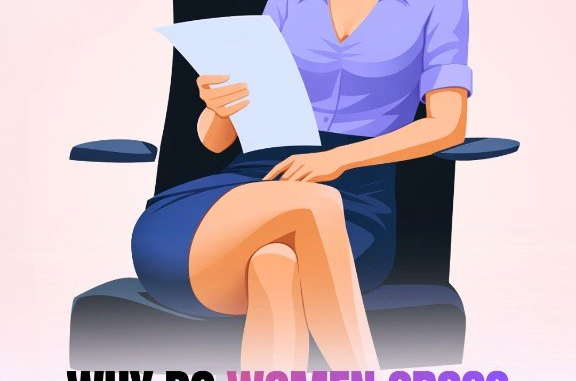
Crossing one’s legs while sitting might seem like a casual habit, but this simple gesture carries far more meaning than it appears. For women, in particular, it reflects layers of cultural influence, psychological cues, and social perception, making it a subtle yet powerful form of communication.
Leg crossing is not merely a personal choice; it is shaped by long-standing cultural and historical norms. Societies have long dictated how women should sit, stand, and move, often tying posture to notions of femininity, modesty, and refinement. In 18th-century Europe, for instance, elegance was measured by posture, and crossed legs symbolized composure and grace. In some Eastern cultures, however, crossing legs could signal disengagement or disrespect, showing that the meaning of this gesture is never universal but highly context-dependent. Even today, media, fashion, and social expectations reinforce leg crossing, making it both a habitual practice and a response to societal pressure, subtly influencing women’s comfort and freedom of movement.
Psychologically, crossing legs communicates messages about confidence, poise, or self-protection. It can indicate self-assurance or, conversely, shyness and vulnerability. Often, the posture acts as an invisible barrier, helping regulate personal space and interaction. Behavioral studies suggest that body posture reflects emotional state: a tightly crossed position may reveal anxiety or insecurity, while a relaxed stance signals confidence and openness. The meaning also depends on context—the way the legs are crossed, their tension, and their direction relative to others all affect interpretation. In this sense, leg crossing is a subconscious form of expression, subtly guiding how women are perceived in social interactions.
In social or professional environments, a woman’s posture shapes impressions. Crossed legs can signal reservation, emotional distance, or the need for personal space, while open postures convey engagement and confidence. The orientation of the legs adds nuance: crossed toward someone may indicate attentiveness, while crossed away can suggest disinterest. These nonverbal signals are further shaped by cultural norms. In some societies, crossing legs is neutral or polite; in others, it may appear inappropriate. Women, more than men, are judged for how they sit, and these judgments can influence perceptions of authority, professionalism, and assertiveness.
Crossing legs reflects both internal states and social expectations. Stereotypes associate the posture with elegance, femininity, and restraint, but it can also imply passivity or vulnerability. In professional contexts, women with crossed-leg postures may be perceived as reserved, while those who sit openly may appear more confident and authoritative. Understanding this dynamic reveals how even minor gestures are shaped by cultural and gendered norms, affecting how women navigate daily interactions.
As society evolves, the meaning of posture should too. Encouraging women to prioritize comfort and authenticity—whether that means crossing their legs or not—supports self-expression and gender equity. Leg crossing is more than a habit or a symbol of elegance; it reflects history, personality, and the subtle ways social norms and expectations influence behavior. Even a small gesture carries layers of cultural, emotional, and social significance, reminding us that body language is never trivial but a reflection of identity, context, and the unspoken rules that shape daily life.