Before sunrise, when the apartment was still quiet, I stood under the harsh glare of the kitchen light. This small patch of brightness was my battlefield. My name is Meredith, and packing my son Andrew’s lunch isn’t a chore—it’s survival. It’s how I fight against bills that never end, prices that keep rising, and the gnawing fear that I’ll never do enough to keep him safe and fed.
I’ve learned to stretch every penny. I know which stores mark down fruit that’s a little bruised. I can spot “best by tomorrow” items from across the aisle. A single loaf of bread, handled carefully, can last nearly a week. In our home, a packed lunch isn’t convenience—it’s a promise: Andrew will never sit in class hungry, no matter what.
Andrew is different. Observant. Thoughtful. While other kids ask for snacks or toys, he notices the quiet struggles around him: my sighs at the mailbox, the dimmed lights at night. Lately, his lunchbox has been coming home empty—and then he started asking for “just a little extra.”
“Mom, can I take two granola bars today?”
“Do we have extra crackers?”
“Could I have another sandwich… just in case?”
I had twenty-three dollars to my name that week, and payday was still far off. I pawned my mother’s old gold locket, skipped breakfast, stretched the soup, and tucked an extra sandwich and a chocolate bar into Andrew’s bag. I watched him leave for school, thinking I’d done what mothers do: quietly keep everything together.
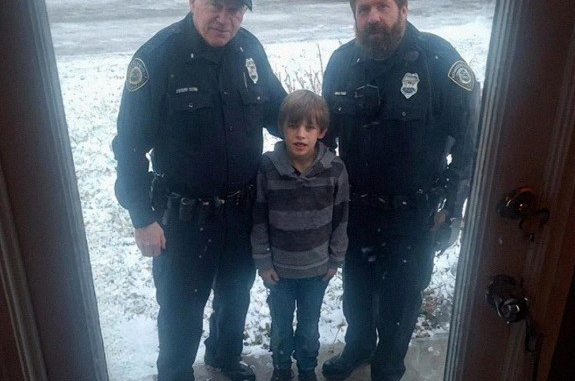
Ten minutes later, a knock came at the door. Two police officers. Calm, professional—but their presence froze my heart. They assured me Andrew was safe, but asked me to come with them. No explanation. Just those words.
At the school, in an empty classroom, Andrew’s teacher and the counselor waited.
“Meredith, this isn’t about trouble,” the counselor said gently. “It’s about something your son has been doing.”
They told me about Haley, a classmate who had been coming to school without lunch, day after day. She had stopped participating, stopped smiling. And Andrew—he had noticed. Every day, he had been sharing his own food with her, giving her the snacks he thought she’d enjoy most, even skipping meals so she wouldn’t go hungry.
My chest tightened. I realized that my son had been quietly saving another child from hunger.
Haley’s father, a tired, overworked man, came in next. “She never told me,” he said softly. “Andrew made sure she had enough. Those granola bars, the little extras—he was her hero.”
We stood there, two parents humbled by the courage and generosity of a ten-year-old boy. A few days later, a box arrived at our door: grocery gift cards, snacks, coffee, and a note from the school. No lectures, no paperwork. Just quiet help.
I still pack Andrew’s lunch every morning. But now, I always pack extra. An extra sandwich. An extra apple. The happiest-looking granola bar I can find.
Because Andrew taught me something I’ll never forget: kindness isn’t about having more than you need. It’s about refusing to look away when someone else has less.
The police came because of a lunchbox. They left behind hope.