When my best friend Mia insisted on setting me up with her boyfriend’s friend, I was hesitant. Blind dates had never been my thing, and I wasn’t sure I wanted to meet someone through a setup. But Mia was persistent, assuring me that he was polite, dependable, and genuinely a good person. She promised it would be low-pressure, so I agreed. His name was Eric, and from our first messages, he seemed genuinely interested in getting to know me—asking thoughtful questions, writing full sentences, and never pressuring me to respond quickly. Over the course of a week, our conversation remained light and friendly, and eventually, he suggested meeting for dinner at a well-known Italian restaurant downtown.
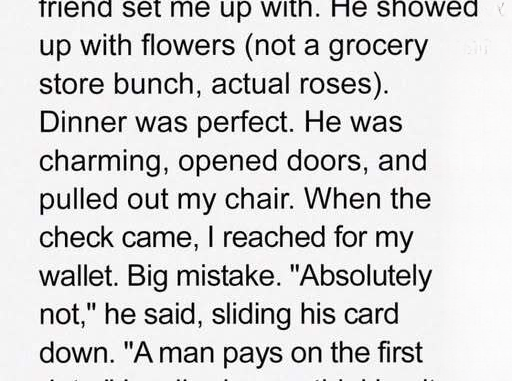
The evening began surprisingly well. Eric arrived early, dressed sharply, and even carried a small bouquet of roses. He greeted me warmly, pulled out my chair, complimented my dress, and handed me a tiny engraved keychain as a thoughtful gesture. The first impression was that of someone trying to be charming and courteous in a slightly old-fashioned, sweet way. Our conversation over dinner flowed easily; we spoke about travel, work, past dating experiences, and a few awkward moments from our lives, laughing more than I expected. For a time, I forgot my initial hesitation.
When the check arrived, Eric waved it off with a confident smile. “A man pays on the first date,” he said. I accepted it with a polite nod, thinking it was just his way of being courteous. After dinner, he walked me to my car, waited until I was safely inside, and said goodbye. The night ended on what seemed like a hopeful note, and I left feeling cautiously optimistic.
The next morning, however, things took an unexpected turn. Instead of a casual follow-up text, I found an email in my inbox with the subject line: “Invoice for Last Night.” At first, I laughed, assuming it was some kind of joke. But as I read through it, I realized he was serious. The email itemized every part of the evening: the dinner, the flowers, the keychain, and even something labeled “emotional labor.” At the bottom, a warning suggested that failure to comply might involve Chris—Mia’s boyfriend—in some way.
Confused and slightly alarmed, I immediately texted Mia. She responded instantly: “He’s insane. Do not respond.” Together, Mia and Chris confirmed that Eric had a history of entitlement and that his behavior was a red flag. They even sent him a humorous “invoice” back, charging him for being rude and making someone uncomfortable, hoping to diffuse the situation with a bit of satire. But his reactions escalated—from defensive, to angry, to self-pitying—showing that the night had shifted from charming to clearly problematic.
I ignored him completely after that, and eventually, Mia and Chris cut ties with Eric to prevent further issues. Reflecting on the experience, the night felt surreal—starting like a romantic comedy and ending like a cautionary tale. It was a sharp reminder that generosity, kindness, or politeness are never debts owed, and that paying attention to red flags is just as important as enjoying the moments that seem harmless at first.
The lesson was clear: a thoughtful gesture doesn’t grant someone ownership, and a first date should never feel transactional. I didn’t pay his invoice, but I certainly paid attention—and that awareness will stay with me far longer than the memory of dinner itself.