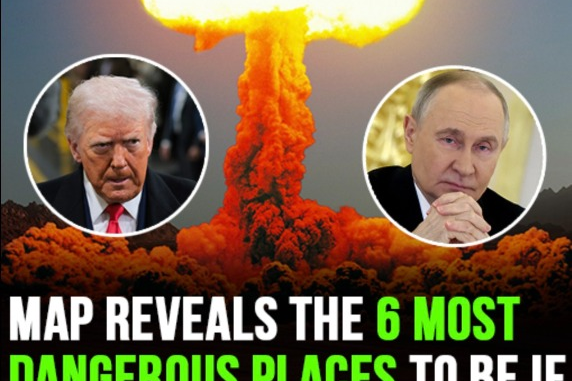
A third world war would have no winners. In an age of nuclear weapons, cyber warfare, and advanced missiles, a global conflict would not be fought on distant battlefields but felt immediately by civilians worldwide. Cities, infrastructure, and entire societies would be at risk, with consequences that could not be undone.
No single crisis would cause World War III—it would emerge from overlapping conflicts, hardened alliances, and miscalculations made under pressure. While no place on Earth would be truly safe, certain regions would face far greater danger due to their strategic importance and existing tensions.
The United States would likely be a central target because of its military power, global alliances, and concentration of high-value infrastructure. The Middle East, particularly Iran and Israel, remains highly volatile, where any major escalation could quickly draw in global powers.
Eastern Europe is another major flashpoint, with Russia’s war in Ukraine reviving Cold War–level tensions and raising the risk of a direct NATO confrontation. In East Asia, Taiwan stands out as one of the most dangerous pressure points, as China has not ruled out using force and any conflict there would disrupt global trade and security.
North Korea adds further unpredictability, with its nuclear ambitions and growing ties to other adversarial powers making it a dangerous wildcard.
What makes a future world war especially terrifying is its speed and reach. Cyberattacks, infrastructure collapse, and nuclear fallout would erase the idea of safe zones. Even nations far from combat would suffer through economic breakdowns, shortages, and environmental damage.
Avoiding such a future depends not on hope alone, but on restraint, diplomacy, and global accountability. In a modern world war, the danger would not be distant—it would be everywhere.