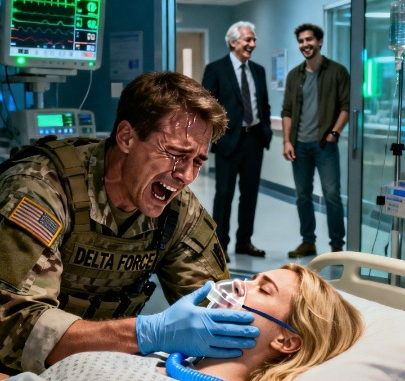
A soldier fears many things, but nothing compares to coming home and finding the place meant to be safe turned into a grave. I had survived war with Delta Force, but nothing prepared me for seeing my wife, Tessa, broken in an ICU bed—doctors listing fractures and blunt trauma as if reciting a demolition report. Worse still, her powerful family stood outside her room in tailored suits, pretending to mourn.
I had imagined returning from deployment to light and warmth. Instead, I came home to darkness, an unlocked door, and the smell of bleach and blood. Police called it a robbery gone wrong, but I knew better. Tessa had no defensive wounds—she knew her attackers.
Her family had always despised me, and grief never touched their eyes. Back at the house, I found what she’d hidden for me: a recorder beneath the dining table. It captured the truth—her father and brothers demanding she sign papers to exploit my name, her refusal, and the order that led to her beating.
Grief hardened into focus. This wasn’t random violence—it was punishment.
I didn’t reach for the law. It was already owned. I prepared instead, knowing exactly who had held her down and who had given the orders. They thought they had silenced her and broken me.
They were wrong.
War had taught me one thing clearly: you don’t hunt a hunter—and you don’t mistake silence for surrender.