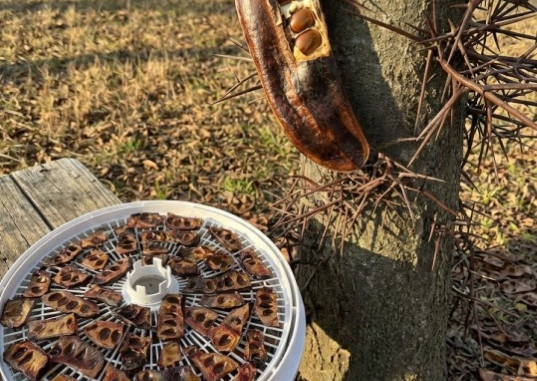
Often overlooked in North American landscapes, the honey locust (Gleditsia triacanthos) is far more than a simple shade tree. Native to the Mississippi Valley and Appalachian foothills, it has long been a multipurpose resource for Indigenous peoples and early settlers, offering food, medicine, and materials for daily life.
Its long, curled seed pods contain a sweet, edible pulp that provided a natural sugar source, while the roasted seeds could substitute for coffee or be ground into flour. Beyond nutrition, the tree’s dense, rot-resistant wood was prized for fence posts, tool handles, and construction, while its bark and pods supplied natural soap for cleaning. Even the formidable thorns served practical uses as pins or fishhooks.
Ecologically, the honey locust supports wildlife with its filtered canopy and nutritious pods, fostering biodiversity beneath its branches. Its resilience in poor soil, heat, and drought makes it ideal for urban spaces, bridging history and modern life.
From sweet pulp to sturdy timber, this unassuming tree is a hidden treasure—an enduring symbol of nature’s resourcefulness and generosity, quietly offering value to anyone willing to notice.