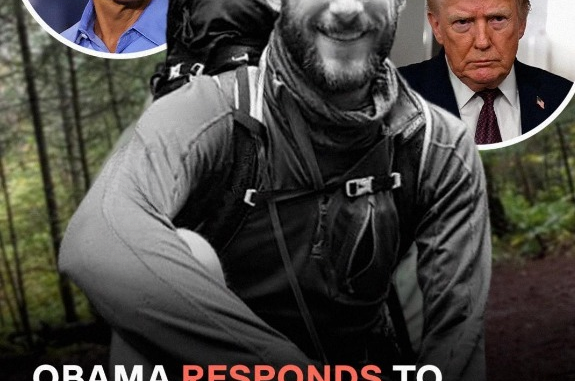
Former President Barack Obama released a rare and forceful statement following the death of Alex Pretti, a 37-year-old Minneapolis ICU nurse and military veteran who was fatally shot during a confrontation with federal agents. Issued on January 25, 2026, Obama’s remarks framed the killing as part of a broader failure of restraint and accountability in federal law enforcement, not an isolated tragedy.
Calling Pretti’s death “deeply heartbreaking,” Obama warned that fundamental American values are under increasing strain. He urged people across the political spectrum to view the incident as a serious warning sign. The statement marked one of Obama’s sharpest public critiques since leaving office, placing responsibility not only on those directly involved, but on the policies, tone, and leadership of the Trump administration.
Obama argued that an aggressive federal approach has fueled unrest and heightened the risk of unnecessary loss of life. Referencing recent fatal incidents involving both Pretti and Renee Good, he suggested that officials appeared quick to escalate tensions and even quicker to defend lethal actions before investigations could establish the facts. In his view, the issue lies in repeated tactics and rhetoric that prioritize force over caution.
He condemned what he described as “extraordinary” enforcement methods, saying federal agents have increasingly used intimidation rather than protection as their guiding principle. Obama echoed criticism raised by former Homeland Security officials, characterizing some recent conduct—particularly involving masked ICE personnel—as “lawless, cruel, and deeply embarrassing.”
Obama also questioned the credibility of early official statements following the shootings, noting that some claims appeared unsupported or contradicted by available video evidence. While stopping short of assigning legal guilt, he warned against shaping public narratives before impartial investigations are completed.
Alongside his criticism, Obama called for de-escalation. He urged federal authorities to cooperate with Minnesota Governor Tim Walz, Minneapolis Mayor Jacob Frey, and local law enforcement to restore trust and prevent further violence. “This must stop,” he warned, cautioning that continued escalation could cost more lives in an already volatile environment.
He reaffirmed support for peaceful protest as a legitimate tool for accountability, while stressing that nonviolence is essential to preventing further division and ensuring scrutiny remains focused on those in power.
The most emotional response came from Pretti’s family, who released their first public statement describing themselves as devastated and furious. They accused the administration of deliberately misrepresenting who Alex was and what happened in his final moments, rejecting claims that he posed an immediate threat.
According to the family, video footage shows Pretti unarmed at the moment he was confronted, holding a phone and attempting to shield a woman who had been pushed to the ground during an ICE operation. They allege he was pepper-sprayed, restrained by multiple agents, and shot during a chaotic escalation. This account sharply contradicts official statements claiming he was armed and that lethal force was necessary.
The family emphasized Pretti’s life beyond the incident, describing him as a compassionate nurse who cared for veterans at the Minneapolis VA hospital and consistently stepped in to protect others. They condemned efforts to portray him as dangerous, arguing such language was used to justify force and suppress public outrage.
As investigations continue, Pretti’s death has become a national flashpoint in debates over federal authority, use of force, and the dangers of narrative-driven governance. Between Obama’s unusually blunt condemnation and the family’s grief-filled testimony, the case now represents a broader test of whether transparency, accountability, and restraint will prevail in a deeply divided moment.