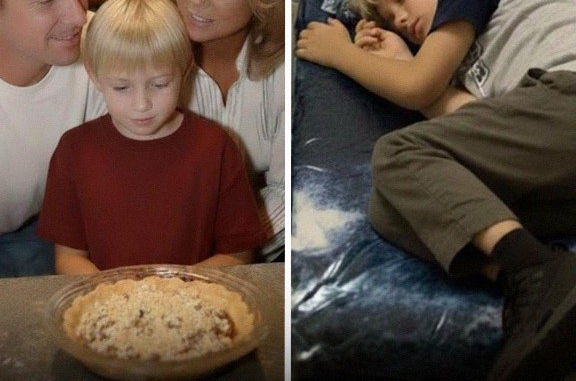
When I was ten, my parents died on a snowy winter night.
After the funeral, my father’s sister, Linda, showed up, wrapping me in long, dramatic hugs—hugs meant for an audience.
“I’ll take Ethan,” she announced. “Of course I will.”
It was framed like a favor, like a generous act. But at her house, I was given a tiny room at the back. No bed—just a thin mattress on the floor and a blanket that smelled like dust. Her own children had bunk beds, desks, and shelves overflowing with toys. I had a corner.
The first night, I asked about my things.
“Later,” she waved me off. “You don’t need much.”
Later never came.
My parents had left money for me—not a fortune, but enough to be cared for and go to college. Linda took it.
The kitchen was renovated. A new car appeared. Piano lessons, tennis, tutors—all for her children.
One day I asked, “Is that from Mom and Dad’s money?”
She didn’t even look at me. “Be grateful you’re not in foster care.”
I stopped asking.
A week later, she announced I was being sent to boarding school. “For your own good,” she said. I didn’t argue.
At first, she called. Then less frequently. Then not at all.
After graduation, I returned to my parents’ home—only to find a stranger at the door. She had sold it. I was left to sleep on couches, take any job I could find, save every penny, and keep moving.
I wasn’t gifted. But I was stubborn.
Through scholarships, night shifts, and relentless practice, I got into culinary school. I worked harder than anyone, stayed late, practiced constantly, and slowly became a pastry chef. I built a small bakery, a life I could call my own. I bought a modest house.
Then one evening, someone knocked sharply at my door.
Linda.
She looked smaller, older, anxious. Her coat was thin, her purse clutched tightly.
“You have to let me in,” she said.
“I don’t have to do anything,” I replied.
“I’m sick,” she said. “My heart. Blood pressure. I shouldn’t be alone.”
“Call your kids,” I said.
“They don’t speak to me,” she whispered. “I have nowhere else.”
I laughed dryly. “You always had somewhere else when it was me.”
“I raised you,” she said.
“You housed me,” I corrected. “There’s a difference.”
“I fed you. I gave you a roof. You owe me.”
I asked how long she intended to stay. She said “just until I get back on my feet.” I set the boundaries. Temporary. We’d talk tomorrow.
She walked in as if she belonged.
And then the old patterns began. Opinions about my life, my spending, my habits. Reorganizing my kitchen. Going through my mail. Snooping in closets. She found a small box of my keepsakes—photos, my mother’s scarf, her recipe notebook.
Inside was a tiny brass key. She didn’t deny why she was there.
The next morning, I went to the bank. The truth came out: the trust was secure. Only I was authorized. She had tried to access it and failed.
I returned home, placed the documents on the table, and gave her a week to leave.
She left.
The house felt lighter.
That night, I baked. Just for me.
For the first time, I wasn’t protecting my past—I was finally living in it.