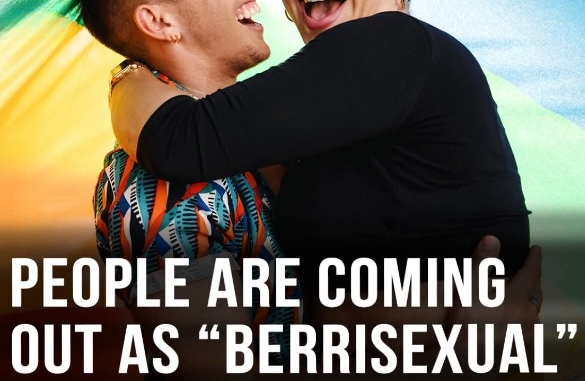
Berrisexuality is a relatively new micro-label used by people who feel attraction to all genders, while consistently experiencing a stronger or more frequent pull toward women, feminine-presenting, and androgynous individuals. Attraction isn’t exclusive—but it isn’t evenly distributed either.
Those who identify this way often note that attraction to men or masculine-aligned people still exists, just with less intensity or frequency. It may feel secondary rather than central, a pattern that’s been present for years even when broader labels seemed to fit well enough.
For some, identities like bisexual or pansexual can feel overly broad, implying a balance that doesn’t quite match lived experience. When attraction has a clear tilt, those labels can feel true in theory but incomplete in practice.
Many people encounter berrisexuality through online spaces such as Reddit threads and queer-focused wikis. Discovery often comes with a sense of recognition—like finally seeing an internal experience put into words.
One person described the relief simply: “I don’t have to force myself into a box anymore. Berri feels right.” For them, the label didn’t narrow their identity—it gave it clarity.
Within these communities, there’s a strong emphasis that micro-labels are optional. They aren’t rules or requirements, but tools people can use if they help make sense of personal experience.
For those who’ve long felt slightly out of sync with existing labels, berrisexuality can be deeply affirming. It acknowledges that attraction can be broad yet directional—complex without being contradictory.
In that sense, berrisexuality isn’t just a new word. It’s a way of respecting nuance, allowing language to adapt to attraction rather than forcing attraction to conform to language.