In the intricate dance of human interaction, dominance is rarely established through shouting or theatrical confrontation. More often, it’s secured through the swift, well-aimed strike of clever humor. We live in a world saturated with communication yet starved of attention, where long-term relationships develop uneven expectations and everyday encounters carry quiet power struggles. In these moments, a perfectly delivered line doesn’t just end a conflict—it reclaims balance, dissolves tension, and turns awkwardness into something memorable.
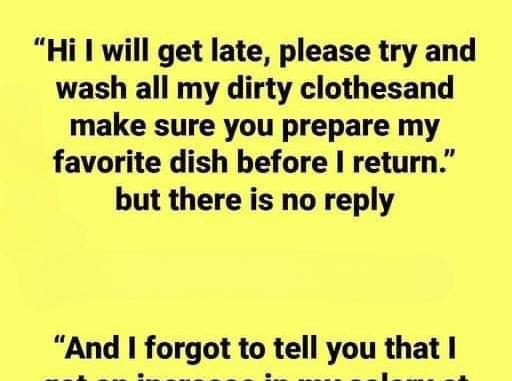
Consider a familiar frustration of modern life: the unanswered text. There’s a special kind of irritation when a message to your partner disappears into the glow of their phone without acknowledgment. One evening, a man found himself in that exact position. Working late and craving the comfort of home, he sent his wife a detailed message—asking her to handle a specific load of laundry and prepare his favorite meal so it would be ready when he arrived. Minutes passed. No response. He was certain she’d seen it and chosen to ignore it.
Rather than pushing the issue or starting an argument, he chose a more imaginative approach. He sent a second message, carefully crafted for maximum effect. “Just got word from work,” he wrote. “Huge raise and a big bonus. Tomorrow I’m heading to the dealership to buy that SUV you’ve been wanting—fully loaded, in your favorite color.”
The reply came instantly. Excitement lit up his screen. “Wait—are you serious? That’s amazing!”
He let the moment breathe before replying. “Nope. Just checking to see if you noticed my first message about the laundry and dinner.” The tactic worked flawlessly. The promise of luxury cut through the silence far more efficiently than any domestic request.
Quick humor also becomes invaluable when routine begins to erode appreciation in long-term relationships. After ten years of marriage, one man walked into his bedroom to find his wife feverishly packing suitcases.
“Where are you going?” he asked.
“I’m moving to Las Vegas,” she replied without hesitation. “I found out men there will pay me $500 for what I do for you every day for free. Why stay here when I could make money?”
He stood still for a moment, then calmly grabbed his own suitcase and began packing.
She stared at him. “What are you doing?”
“I’m coming with you,” he said evenly. “I want to see how you survive on $1,000 a year.”
The line landed cleanly—humor carrying a sharp dose of reality. In one sentence, he reframed her complaint and exposed the flawed math behind it. What felt undervalued, it turned out, was far more frequent than she realized.
Outside the home, wit is equally potent, especially in clashes between generations. Few encounters spark instant irritation like the parking lot hijacker. One afternoon, an elderly woman patiently waited in a crowded shopping center, her turn signal clicking as she held her place for a departing car near the entrance. She’d been there nearly ten minutes.
Just as the spot opened, a red Mercedes whipped around the corner, cut her off, and slid neatly into the space.
The young driver stepped out, smug and self-satisfied. The woman rolled down her window. “Excuse me,” she said calmly. “I’ve been waiting for that spot for quite some time.”
He waved her off. “That’s life when you’re young and fast.”
He turned away, assuming the matter was settled.
It wasn’t.
Without raising her voice, the woman put her car into gear and drove directly into the side of his luxury vehicle. The crunch of metal echoed across the lot.
He spun around in shock. “What are you doing? You just destroyed my car!”
She looked at him, composed and unbothered. “That’s what happens,” she replied, “when you’re old and wealthy.”
Across all these moments, the pattern is clear. Someone attempts to assert control through indifference, arrogance, or assumed advantage. Each time, they’re neutralized—not with force, but with timing and intelligence. Sharp humor becomes the ultimate equalizer. It reminds the inattentive partner they’re being seen, grounds the dissatisfied spouse in reality, and teaches the overconfident that experience often comes with both wisdom and leverage.