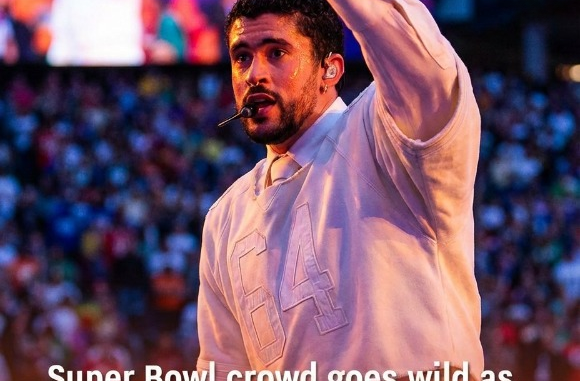
The atmosphere at Levi’s Stadium was already vibrating with the concentrated energy of a championship game, but as the clock wound down to halftime, the air shifted from sporting tension to pure, unadulterated spectacle. The Super Bowl has long been more than just a football game; it is a cultural anchor, and the 2026 halftime show promised to be a defining moment for the modern era. When the lights finally plunged the stadium into a momentary, expectant darkness, the opening chords of Bad Bunny’s set began to pulse through the turf, turning the massive arena into a vibrant, neon-soaked celebration of global culture.
Bad Bunny, the Puerto Rican superstar who has redefined the boundaries of Latin music, did not just take the stage; he commanded it with the ease of a veteran and the fire of an icon. Dressed in an ensemble that blended high-fashion edge with street-level grit, he moved through a medley of his greatest hits, his voice echoing with a confidence that bridged the gap between the stadium’s rafters and the millions watching at home. The choreography was a masterclass in scale, featuring hundreds of dancers who transformed the field into a swirling mosaic of rhythm and color. For the first half of the set, it seemed the show had already reached its zenith, with the crowd on their feet, fueled by the relentless energy of reggaeton and trap beats.
However, the true genius of the Super Bowl halftime show lies in its ability to deliver the impossible. Just as the set reached a fever pitch, the stage geometry shifted, and a familiar silhouette appeared through a haze of pyrotechnics. The roar that erupted from the stands was a physical force, a wall of sound that nearly drowned out the music as Lady Gaga emerged from the wings. It was a collision of two musical titans—the King of Latin Trap and the Mother Monster—sharing a single spotlight in a way that felt both revolutionary and inevitable.
The chemistry between the two was instantaneous. Gaga, known for her theatricality and vocal prowess, brought a soaring, rock-infused dimension to Bad Bunny’s rhythmic flow. They didn’t just stand near each other; they engaged in a high-octane performance that felt like a true collaboration rather than a simple cameo. As they moved across the stage, the stadium’s LED wristbands flickered in synchronized patterns, creating a sea of light that mirrored the electric connection between the performers. On social media, the reaction was a digital landslide. Within minutes, clips of the duo were trending worldwide, with fans and critics alike hailing the pairing as a stroke of creative brilliance. The consensus was clear: the sheer charisma on display was “insanely good,” a rare instance where the reality of a performance actually exceeded the immense pre-show hype.
The celebrity magnetism of the night wasn’t restricted to the stage. As the cameras panned the VIP sections, eagle-eyed viewers caught glimpses of the stars who had come to witness the spectacle. One particular shot of actor Pedro Pascal caught the internet’s attention; the “Last of Us” star was seen caught up in the music, dancing with an uninhibited joy that resonated with fans everywhere. His presence added a layer of “cool” to the evening, fueling memes and discussions that blended the worlds of prestige television with global pop music.
Beyond the glitz and the guest stars, the performance highlighted a fascinating reality of the music industry: the economy of the halftime show. Despite the massive production value and the months of preparation, Bad Bunny, like the legends who preceded him, received no performance fee from the NFL. In the world of the Super Bowl, the currency is not a paycheck, but the unprecedented exposure. For fifteen minutes, an artist has the undivided attention of over a hundred million people. This spotlight historically triggers a massive surge in streaming numbers, merchandise sales, and tour bookings. The NFL covers the exorbitant costs of the stage, the lighting, and the pyrotechnics—often totaling tens of millions of dollars—allowing the artist to present a vision of themselves that is grander than anything they could achieve on a standard concert tour. It is a strategic trade-off where global visibility is the ultimate prize.
For Lady Gaga, this surprise appearance was a victory lap in a stadium she has come to know well. Her history with the Super Bowl is storied, ranging from her soaring rendition of the national anthem in 2016 to her own legendary headline set in 2017, which famously began with her jumping from the roof of the stadium. Having returned just a year prior for a pregame performance, her involvement in 2026 felt like a testament to her enduring relevance and her status as a reliable pillar of live entertainment. Her ability to seamlessly integrate into Bad Bunny’s world showed a versatility that few artists possess, proving that she remains one of the most formidable forces in the industry.
As the final notes of the performance faded and a barrage of fireworks lit up the California sky, the stadium remained in a state of collective euphoria. The show had succeeded in doing what the Super Bowl does best: it created a “where were you” moment. It wasn’t just about the music; it was about the collision of different worlds, the breaking of language barriers, and the sheer joy of a shared experience. Bad Bunny and Lady Gaga had delivered a set that felt modern, inclusive, and undeniably spectacular.
In the cold light of the following day, the statistics would likely show record-breaking social media engagement and a spike in digital downloads, but for those in the stands at Levi’s Stadium, the impact was much more visceral. They had witnessed a performance that felt like a turning point, a moment where the halftime show fully embraced its role as a global stage for a global audience. As the turf was cleared and the players returned for the second half, the echoes of the performance lingered—a reminder that in the intersection of sports and pop culture, nothing compares to the lightning-in-a-bottle magic of the Super Bowl stage. The unexpected star had been unveiled, the surprise had landed perfectly, and the bar for future halftime shows had once again been raised to an atmospheric height.