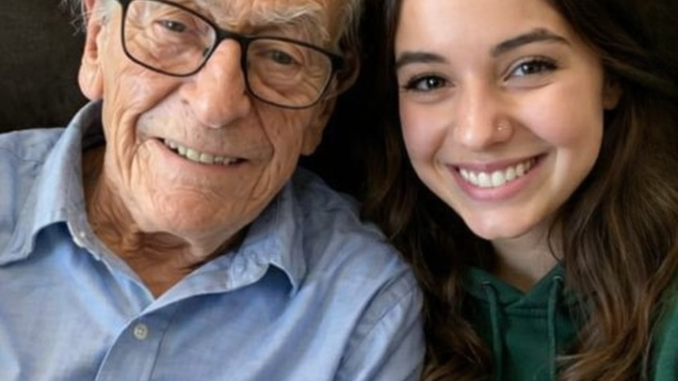
The life of a person is often shaped by the quiet sacrifices of others, but few lives are marked by selflessness as profound as that of my grandfather, Bram. Just two weeks after his funeral in Ohio, I received a call that shattered every assumption I had about our lives. A calm, almost clinical voice from the local bank said, “Winslow, your grandfather was not who you thought he was.”
My story began on a gray, fateful night when I was six. Both my parents died in an accident, leaving me in the terrifying custody of social services. I remember sitting on a sofa far too big for me, listening to adults discuss my fate as if I were luggage waiting to be claimed. Then Bram appeared—sixty-five, bent by decades of labor, knees stiff, hands calloused. Without hesitation, he slammed his hand on the table and declared, “She’s coming home with me. End of discussion.” That night, I found my anchor.
For the next twelve years, Bram became my entire world. He gave me the sunlit master bedroom while he retreated to a cramped, drafty room. He learned to braid my hair, packed lunches with small notes, and attended every school event despite his aching joints. He was a man of action, not words, but his devotion spoke louder than any sermon.
At ten, during our nightly routine, I whispered a dream: “Grandpa, I want to be a social worker and save kids like you saved me.” He held me tight, his heartbeat steady and strong. “You can be anything, Winslow,” he promised.
But life with Bram was one of quiet austerity. There were no vacations, no indulgences, no luxuries. While classmates flaunted gadgets and clothes, I wore patched hand-me-downs. Whenever I asked for something, his gentle refrain was always: “We can’t right now, kiddo.” That sentence sometimes stung, and I hid a bitter resentment, feeling ashamed for being angry at the only person who had ever stood by me.
When illness finally weakened him, I became his caretaker, juggling high school and administering medications. One evening, sensing his time was near, he gripped my hand and said, “Winslow, there’s something I need to tell you.” I begged him to rest, fearing the revelation would confirm our struggles. He passed quietly in his sleep.
The silence after his death was suffocating. When the bank called, I assumed it was to discuss debts. At the branch, I blurted, “Just tell me how much we owe. I’ll pay it back.”
The banker, Ms. Greaves, looked at me with gentle eyes. “He didn’t owe a cent, Winslow. He was one of the most disciplined savers I’ve ever known.” She explained that the day after my parents’ funeral, Bram had set up a restricted education trust, adding to it every month for nearly twenty years. Every skipped meal, every patched coat, every whispered “we can’t right now” had been a deliberate act of love, securing my future.
She handed me an envelope with Bram’s final note. In it, he apologized for every refusal, explaining that each “no” was a promise of “later.” He had left me our house, a fully funded university education, and a legacy that ensured I would never struggle financially again.
The revelation washed over me like a tidal wave. Bram’s life of apparent deprivation was actually a strategy of extraordinary foresight. His silent sacrifices had built the foundation for my life, brick by brick, unnoticed and uncelebrated.
A week later, I applied to the state’s top social-work program. When my acceptance arrived, I didn’t celebrate with anyone. Instead, I stood on our old porch under the stars, reflecting on Bram’s wisdom. The greatest love, I realized, isn’t always in what is given—it’s often in what is withheld for the sake of a brighter future.
“I’m going, Bram,” I whispered. “I’ll save them all, just as you saved me.” The phone he had referenced in his note wasn’t just a device—it was a symbol of a man who had understood every desire and answered it in full. My grandfather was far more than I ever imagined. He was a hero, quietly victorious, and I would dedicate my life to transforming every “no” he ever gave into a “yes” for a child in need.