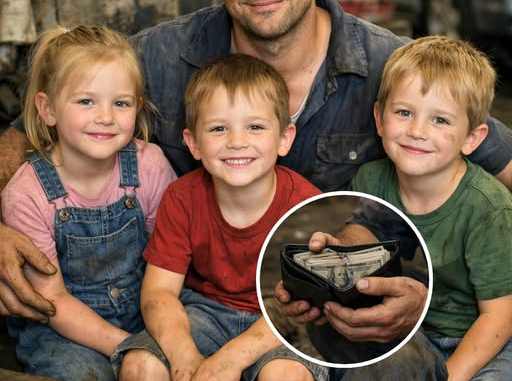
The fluorescent buzz of the auto shop had been the backdrop of my life for fifteen years—a world of spent oil, clanging wrenches, and a coffee machine that had been nothing more than decoration since 2012. At thirty-six, my hands were permanently etched with grease, each blackened line a map of long shifts and sacrifices. Outsiders saw the dirt under my nails and assumed laziness or lack of skill, but those hands were the line between my family and struggle.
I’m a single dad to six-year-old triplets. Their mother disappeared when they were just eight months old, leaving a suitcase-sized emptiness and a quiet I eventually stopped trying to fill. I live with my seventy-two-year-old mother, whose iron spine and tireless heart hold our household together—braiding hair, negotiating with picky eaters, managing the chaos of three energetic children while I’m under a car, wrangling a stubborn transmission.
Last Tuesday was one of those grueling days where you wonder if you’re actually moving forward or just spinning your wheels. The shop was jam-packed, and a particularly irate customer was shouting at me over a check engine light that came on a week after a previous repair.
“You’re a thief! I authorized the fix, and it’s still broken!” he yelled, spittle flying.
“Sir,” I said, calm, “the emissions system and brake pads are separate issues. I fixed what you authorized. It’s all on the invoice.”
He stormed off, leaving me wiping my hands on a rag more grease than cloth, weighed down by the familiar sting of being misunderstood. I wasn’t scamming anyone—I was keeping his car running while keeping my family fed.
Near closing, while sweeping beneath a lift, my broom snagged on something heavy. I bent down and pulled out a thick black leather wallet. Inside were stacks of crisp hundred-dollar bills, more money than I’d seen in three years. For a fleeting second, the temptation to keep it—to pay overdue bills or buy the kids something special—flashed through my mind.
Then I saw the ID: Gary, a kind man in his late seventies who had been in for an oil change earlier. Tucked behind it was an emergency contact card. My heart pounded—not with greed, but with the weight of a decision. I locked the wallet in my toolbox and drove home.
Dinner was the usual chaos: spaghetti, laughter, and three tiny storm clouds recounting their day. I explained nothing, but I knew what had to be done. I couldn’t raise honest kids if I built our comfort on someone else’s loss.
I drove to Gary’s modest bungalow. He answered, leaning on a cane, and when I returned the wallet, his confusion melted into relief.
“I thought it was gone,” he whispered. “This was my entire quarterly pension. I didn’t know how I’d pay for my wife’s care.”
“No,” I said, “this belongs to you. That’s why I brought it back.”
“Why?” he asked.
“I have three kids,” I said. “I want them to grow up seeing people do the right thing. It starts with me.”
The next morning, a sheriff arrived at my door. Behind him, two officers began unloading boxes of winter coats, shoes, groceries, and gift cards.
“You didn’t just return money,” Sheriff Daniels said. “You restored my father’s faith in people. That’s worth more than groceries. Consider it a thank-you.”
Life didn’t magically get easier—backaches and shop struggles remained—but the act of honesty reshaped everything. The sheriff’s help opened doors I hadn’t known existed, from childcare assistance to vocational training that increased my income.
Most importantly, I realized that while I couldn’t control the economy, the broken coffee maker, or difficult customers, I controlled my own integrity. And in the eyes of my three children, that made me the richest man in the world.