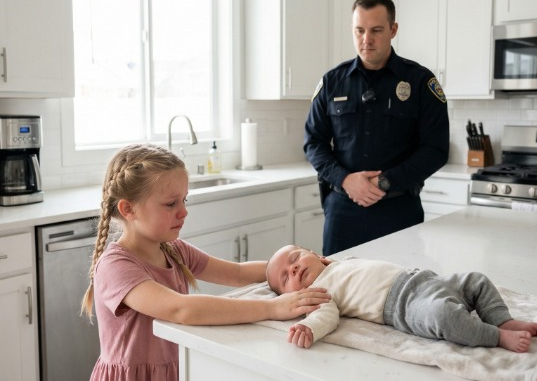
The dispatcher worked beneath the low hum of glowing screens, seasoned by years of crisis. She had coached panicked voices through cardiac arrests, raging fires, and moments of unbearable loss. Very little still surprised her. But on a cold October morning, a child’s voice slipped through the line and stopped her breath mid-inhale. It wasn’t loud or frantic. It was quiet—too quiet—and carried the terrible weight of something a child should never have to notice.
“My baby is getting lighter,” the girl whispered.
The dispatcher’s hands stilled above the keys. She didn’t ask where they were yet. Instead, she softened her voice, lowering it into a calm, steady tone meant to anchor someone drifting.
“What’s your name, sweetheart?”
“Juniper,” the child replied. “But everyone calls me Juni. I’m seven.”
Behind her words came a sound that made the dispatcher’s chest tighten—a thin, weak cry, stripped of the strength a baby’s hunger should have. It was the sound of a body running out of reserves. Juni explained haltingly that her little brother, Rowan, wouldn’t drink anymore. She didn’t know how to help him. She only knew he felt lighter in her arms.
The call was dispatched immediately. In a town where sirens usually meant traffic accidents or noise complaints, this was different. A child describing a baby fading was enough to make everything move faster.
Officer Owen Kincaid arrived first.
A quiet man with two decades on the force, Owen had witnessed neglect in many forms. But as he parked in front of the small house on Alder Lane, what struck him wasn’t chaos—it was fatigue. The place looked worn down rather than destroyed. Paint peeled in thin curls, the porch light flickering weakly, as if the house itself was struggling to stay awake.
When he knocked, the door didn’t open.
“I can’t leave him,” a small voice whispered through the wood.
Owen understood immediately. This wasn’t fear or defiance. It was responsibility—far too heavy for someone so young. He entered the house carefully.
Inside, a single lamp cast a dull glow over the living room. Juni sat on the floor, swallowed by an oversized T-shirt, rocking a baby in her arms. Rowan barely moved. His face was sunken, his skin pale and almost translucent, veins tracing faint blue lines beneath the surface. Each movement looked like effort.
Juni dabbed his lips with a damp cloth, murmuring softly, over and over, “Please drink.” The words sounded practiced.
Nearby, a phone rested on pause.
The video title alone told the story:
How to feed a baby when you don’t have help.
A seven-year-old had been teaching herself how to keep another human alive.
And in that moment, Officer Kincaid understood the truth that would define the case—not just that something had gone wrong, but that this family had been left alone for far too long.