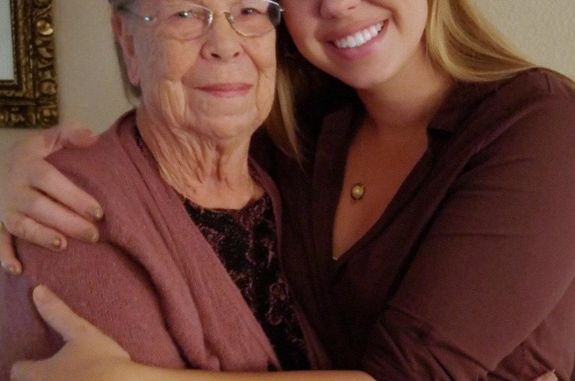
Grief is often likened to waves, but for me, it felt like a staircase ending abruptly in darkness. My grandmother, Catherine, had been more than family—she was my compass. She had taught me that a sprinkle of cinnamon could rescue a lackluster pie and that integrity was the only currency that never lost value. Standing beside her mahogany casket, with lilies’ fragrance hanging in the air and neighbors murmuring softly, I felt the floor vanish beneath me.
The funeral home’s soft glow smoothed the lines on Grandma’s face. She wore the blue silk dress from my college graduation, serene and still. Mrs. Anderson, her neighbor for decades, squeezed my hand. “She never stopped talking about you, Emerald. You were her North Star,” she whispered.
I tried to smile, but my attention kept drifting to my mother, Victoria. She stood apart, immaculate in a black suit, eyes more on the reflection in the polished pews than on the woman who had raised her. Their estrangement had long been justified as a “personality clash,” but to me, it always felt like a chasm in values and morality.
As the room emptied, I watched my mother approach the casket. She didn’t bend to kiss or whisper goodbye. Instead, she glanced around sharply, then slipped a small, blue-wrapped package beneath Grandma’s dress. The sound of her heels on the floor echoed in my chest as she left, leaving behind a scent of expensive perfume and an unsettling knot in my stomach.
“Did you see that?” I asked Mrs. Anderson.
“See what, dear?”
“Nothing,” I murmured, but instinct screamed. Grandma Catherine had been a woman of order and openness—she would never have participated in a secret with Victoria.
After the funeral director retired to his office, silence enveloped the room. Trembling, I reached into the silk lining of the casket. My fingers brushed Grandma’s sleeve before finding the package: a bundle wrapped in one of her embroidered handkerchiefs, the delicate “C” peeking from a corner. I slipped it into my purse and left, the weight of it pressing against my chest.
Back at Grandma’s apartment—the place still scented with lavender and Earl Grey—I untied the twine. Inside were letters, stacked and fragile, revealing a woman I thought I knew had been fighting a quiet, heartbreaking battle.
The letters spanned three years. The first, written in her elegant hand, pleaded: “Victoria, I see the money disappearing. I wanted to trust it was a mistake, but we both know about the gambling. Let me help you find a way back.”
I remembered that winter. My mother had suddenly taken an interest in Grandma’s accounts, claiming she was “looking out for her future.”
Letter after letter detailed Victoria’s systematic deception. She hadn’t just borrowed money—she had drained Grandma, using guilt and promises as leverage. The final letter from Grandma was devastating: “Emerald will inherit what remains. She loved me without price. You may think you’ve won, Victoria, but debts are always collected.”
The last paper, however, was my mother’s own note, dated just two days ago—a spiteful message meant to disappear with Grandma: “Fine. I took the money. But Emerald loves me. She’ll give me whatever I want, including your inheritance. I still win. Goodbye, Victoria.”
I sat in the dark, letters strewn around me like fallen leaves. My mother had viewed my love as currency, a means to her advantage.
By morning, grief had crystallized into protective anger. I called her.
“Mom? I found something Grandma left for you. Can we meet at Mill Street Café?”
“Oh, Emerald, darling,” she said, syrupy and sweet. “Of course. So thoughtful of you to handle her affairs.”
When she arrived, bright in a red blazer and poised as if closing a deal, I placed an envelope before her. Inside was her own confession, the letter admitting theft and manipulation, alongside a note of my own.
As she read, her face drained of color. I stopped her before she could lie.
“I have the rest of the letters, Mom. I know about the accounts. I know about the gambling. And I know what you think of my love for you.”
“Emerald, you don’t understand—”
“I understand perfectly,” I said, standing. “You thought Grandma’s death was a victory. She was right—the truth is a debt. Today, I’m closing your account.”
I left the café into the afternoon sun. Grief still lingered, but for the first time, I knew how to navigate it. Some secrets are best buried, but truth keeps you afloat when the waves of loss threaten to drown you.