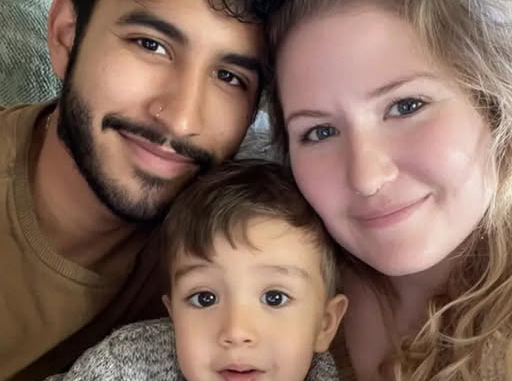
For three years, I lived like a shadow inside my own marriage—present, but unseen. When I married Luis, I didn’t just marry a man; I married into a large, close-knit family that wrapped around each other like armor. Along with the warmth of their traditions came an unspoken assumption: that I, the blonde, blue-eyed American outsider, would never understand their language. Spanish, in their minds, was a wall I wouldn’t dare climb. I let them believe that.
At first, my silence was almost amusing—a private experiment to see who they really were when they thought I couldn’t understand them. But what began as curiosity hardened into something heavier. It became a shield. A burden. I wore it to every gathering.
I sat through Sunday dinners listening to my mother-in-law, Sofia, critique my cooking in detail, describing my food as lifeless and dull. I stood in kitchens pretending not to notice my sisters-in-law whispering about the baby weight I hadn’t managed to lose after Mateo was born. I absorbed every comment about my parenting, my marriage, my personality—every insult delivered comfortably in Spanish, under the protection of what they believed was my ignorance.
Outwardly, I smiled. Inside, I recorded everything.
The small cuts of their criticism turned into something far more devastating last Christmas.
I was upstairs holding the baby monitor when the house fell quiet in that strange way it sometimes does before something important is said. From below, Sofia’s voice carried upward—low, urgent.
“She still doesn’t know, does she? About the baby.”
My body went rigid.
Carlos answered with a dry laugh. “No. And Luis promised not to tell her. He knows it would be a disaster.”
“She cannot find out yet,” Sofia insisted. “We only did what we had to do to protect our blood. I doubt anyone would call it a crime.”
A crime.
The word echoed in my skull. They weren’t talking about some distant family issue. They were talking about Mateo—my three-year-old son asleep just feet away from me.
That evening, I waited for Luis.
He walked in cheerful and unaware, hanging his coat, whistling softly. I didn’t kiss him hello. I led him upstairs, closed the bedroom door, and faced him.
“What are you and your parents hiding from me about our son?” I asked.
He tried confusion first. Then denial.
I didn’t let him continue.
“I understand Spanish, Luis. I’ve understood everything for three years. Every insult. Every joke. And today, I understood your mother perfectly.”
The color drained from his face.
“You have ten seconds to tell me what you did.”
He sat down slowly, as if gravity had suddenly increased.
“They did a DNA test,” he said.
I stared at him.
“On Mateo?”
He nodded. Last summer, while staying with us, his parents had taken hair from Mateo’s brush—and from his own. They sent it to a private lab because they couldn’t accept that their grandson, with light hair and blue eyes, could biologically be Luis’s son.
They suspected me.
“They showed me the results at Thanksgiving,” Luis admitted. “It confirmed he’s mine. I was upset. But they said telling you would only hurt you for no reason.”
For no reason.
They had doubted my fidelity. Violated my child’s privacy. Treated me like a liar in my own home—and my husband chose silence.
“They were trying to protect me,” he said weakly.
“Protect you from what?” I demanded. “From trusting your wife?”
That night, our marriage stood exposed. For the first time, I didn’t soften my words. I told him what it felt like to know his loyalty bent toward his parents. I told him the marriage we had built felt hollow.
He had to choose: remain a son first—or become a husband.
To his credit, something shifted. The shock of realizing I had never been unaware—and the depth of my anger—forced him to confront what he had allowed. He called his parents. He set boundaries. For the first time, he did not mediate or soften the truth. He made it clear their relationship with Mateo depended on respect for me.
Healing has been slow.
I also had to confront my own mistake. By pretending not to understand, I had allowed cruelty to thrive unchecked. I thought I was observing. In reality, I was permitting.
Now, when we visit, I do not sit quietly. I speak Spanish—fluently, clearly, deliberately. The first time I did, the room fell silent in a way that felt almost electric. The power dynamic shifted in an instant.
Sofia is careful now. Her tone measured. Her gestures more generous, tinged with anxiety. She knows access to her grandson is no longer guaranteed.
I don’t know if I will ever fully forgive them. Some betrayals carve too deep to smooth over with apologies.
But I have learned something essential: silence is not strength when it protects the wrong people.
I am no longer a spectator in my own life. I am not a guest in my marriage. And if someone chooses to speak in a language they think shields them from accountability, they should choose their words wisely.
Because I am listening.
And now, I answer back.