My name is Rachel Morgan, and until last weekend, I believed family was anchored in loyalty and respect. I believed that blood naturally meant protection. I was wrong. Sometimes families stand on foundations already fractured—cracks that only reveal themselves when a child’s heart is placed under pressure.
This story is about my daughter, Emily.
Emily is seventeen and naturally quiet. She doesn’t compete for attention or fill rooms with her voice. Instead, she expresses herself through cooking. For her, the kitchen is a sanctuary. It’s how she shows love—through careful preparation, thoughtful flavors, and meals that feel like an embrace.
When my mother’s seventieth birthday was approaching, Emily came to me with an idea that was both bold and deeply sincere. She didn’t want to buy her grandmother a present. She wanted to create one. She asked if she could prepare the entire birthday dinner herself—for all twenty-three guests.
Not just dessert. Not just a side dish.
Everything.
I hesitated. Feeding that many people is no small undertaking, even for professionals. I gently suggested she scale back—maybe focus on one standout dish. But she shook her head, smiling with quiet determination.
“I just want Grandma to feel special,” she said.
That’s when I realized it wasn’t about cooking. It was about devotion.
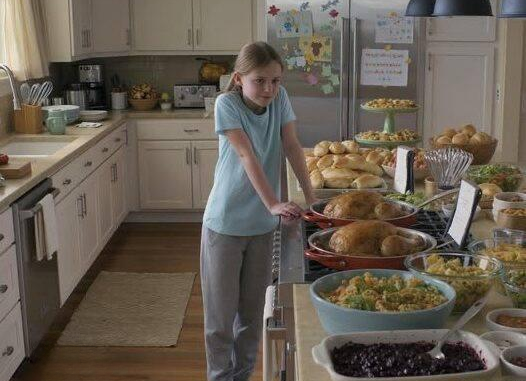
She started on Wednesday. By Thursday, our kitchen looked like a professional catering operation. The air was rich with herbs, caramelized onions, and freshly baked bread. Handwritten recipes were taped to cabinets. Counters disappeared beneath piles of vegetables and mixing bowls.
She planned roasted herb chicken, fresh-baked garlic bread from scratch, colorful salads with homemade dressings, and a blueberry crumble that filled the house with warmth.
For three days, she barely rested. She set alarms to check sauces at midnight. She dozed briefly on the couch between batches of dough. She looked exhausted—but proud. Watching her, I felt something swell in my chest. It wasn’t just admiration for her skill. It was awe at her heart.
By Saturday afternoon, everything was ready. Trays neatly arranged. Food carefully stored for transport. The dinner was scheduled for six o’clock at my parents’ house.
At 4:12 p.m., my phone buzzed.
A message from my father.
“We’ve decided to celebrate at a restaurant instead. Adults only.”
I reread it three times.
Adults only.
No apology. No acknowledgment of the three days of work. No invitation for Emily to join them at the restaurant. Just a decision, casually delivered.
Telling her was unbearable.
She was in the kitchen, finishing a garnish when I walked in. When she read the text, the sound she was making—soft humming—simply stopped. Her shoulders sank. She looked around at the rows of dishes she had created and asked quietly, “Why?”
She didn’t cry. She didn’t yell. She just stood there in the middle of her rejected effort.
In that moment, something inside me hardened.
I looked at the food. Then at my daughter.
“We are not letting this go to waste,” I told her.
I posted on our neighborhood community page:
“Homemade feast available tonight. Free. If you’re a single parent, elderly neighbor, or anyone who could use a warm meal, please come by.”
Within an hour, the doorbell rang.
Then it rang again.
And again.
People arrived cautiously at first—tired nurses coming off long shifts, an elderly man who admitted he hadn’t shared a meal with anyone in weeks, a mother juggling two small children. Emily greeted them softly, served each plate personally, and explained what she had made.
They thanked her. Some told her it was the best meal they’d had in years.
And I watched something extraordinary happen: her heartbreak transformed into purpose.
By the end of the night, the food was gone. But Emily stood taller than I had ever seen her. She had witnessed the power of her gift.
The next morning, my parents arrived at 9:03 a.m., furious.
Apparently, word had spread. People were asking why my mother’s granddaughter had fed the neighborhood instead of attending her own grandmother’s birthday dinner.
My mother was embarrassed. She called my actions dramatic. She dismissed Emily’s effort as childish overexertion.
That was the moment I stopped trying to preserve harmony.
I told her clearly: respect is not optional. Not for me. Not for my daughter.
I said she was not welcome in our home until she could acknowledge the hurt she caused.
She left angry.
My father lingered. For the first time, I saw regret in his face. He glanced toward the kitchen where Emily stood out of sight. Something in him understood what had been lost.
In the following days, the “Community Feast” became something of a local story. Emily received thank-you messages. A local café owner reached out after hearing about her cooking. She started researching culinary schools—not because she felt she had to prove anything, but because she now understood her own potential.
A week later, my father returned alone.
He apologized sincerely to Emily. No excuses. No deflection. He brought her a professional chef’s knife engraved with her initials—a quiet acknowledgment of the future he nearly undermined.
Things aren’t perfect. My mother remains distant. The family dynamic has shifted, perhaps permanently.
But when I see Emily practicing her knife skills at the counter, focused and confident, I know I chose correctly.
Sometimes families need to fracture before they can rebuild stronger. Sometimes protecting your child means disappointing your parents.
I stood up for my daughter.
And in doing so, I watched her step fully into herself.