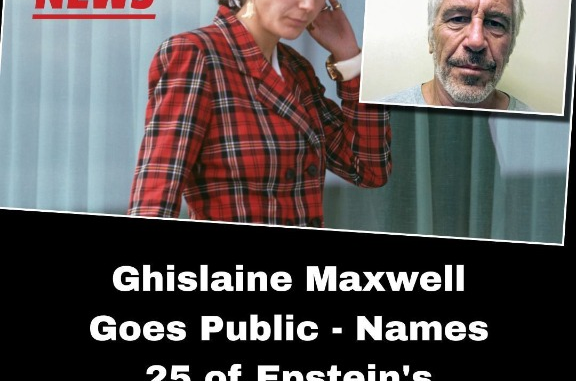
Ghislaine Maxwell is no longer remaining quiet behind prison walls. From a federal facility in Texas, the convicted sex trafficker has launched a fresh legal and public challenge that threatens to reopen unresolved chapters of the Jeffrey Epstein case. In newly filed handwritten motions, Maxwell alleges that twenty-five high-profile associates connected to Epstein quietly negotiated “secret settlements” that spared them public prosecution. According to her claims, while she became the face of the scandal, a broader circle of influential men and insiders allegedly secured private deals that kept them out of criminal court.
Maxwell’s latest maneuver attempts to reshape the narrative surrounding her conviction. Rather than positioning herself solely as a perpetrator, she portrays herself as the convenient defendant—prosecuted publicly while others with comparable knowledge or involvement avoided similar scrutiny. She alleges a two-tiered justice system in which she and Epstein were prosecuted, while others allegedly finalized confidential agreements that prevented their names from appearing in indictments. She also references several former staff members who, she claims, were granted immunity or were not pursued despite possessing direct knowledge of Epstein’s operations. According to Maxwell, information about these individuals was not made fully available to her defense team, an argument she frames as prosecutorial unfairness.
Her filings coincide with renewed scrutiny surrounding the broader Epstein archive. Legal proceedings have prompted the release of previously sealed materials, including records, flight logs, and witness statements. As documents slowly become public, Maxwell is pointing to redactions and sealed agreements as evidence of what she describes as selective prosecution. She is amplifying a long-standing public question: who else was involved, and why were some individuals never charged?
Central to Maxwell’s argument is the idea that responsibility was unevenly distributed. By asserting that dozens of others were shielded through confidential civil agreements, she is attempting to cast doubt on the completeness of her prosecution. Her claim suggests that while the most visible figures faced trial, others may have resolved allegations through nondisclosure agreements or financial settlements outside criminal proceedings.
Legal analysts have expressed skepticism about whether these arguments could overturn her conviction. Courts typically require substantial new evidence—not rhetorical challenges—to reopen cases. Nevertheless, Maxwell’s allegations resonate with segments of the public who already question whether influential individuals receive preferential treatment within the justice system. As more documents enter public view, each redacted name or sealed deposition fuels speculation about who else may have been connected to Epstein’s network.
For survivors, Maxwell’s claims create a complex dynamic. If additional wrongdoing were uncovered, it could broaden accountability. At the same time, her effort to depict herself as a casualty of an unequal system has been widely criticized as an attempt to minimize her own role. To many observers, her motions appear less like whistleblowing and more like a strategic effort to shift focus.
The timing of her filings is notable. As archival material becomes public through court orders, the Department of Justice faces renewed questions about past prosecutorial decisions and non-prosecution agreements. Maxwell’s emphasis on “secret settlements” taps into the reality that civil litigation often allows disputes to be resolved privately, sometimes without criminal consequences.
Whether her appeal ultimately succeeds or fails, Maxwell has managed to redirect public discussion. Attention is no longer focused exclusively on her crimes, but also on the broader question of who else may have escaped scrutiny. In that sense, even from prison, she continues to influence the narrative surrounding one of the most notorious criminal scandals of the past decade.
As additional documents are reviewed and debated, Maxwell’s allegations will likely remain part of the conversation. The courts may ultimately dismiss her claims, but the broader cultural question—whether the full extent of the Epstein network was ever exposed—continues to linger.