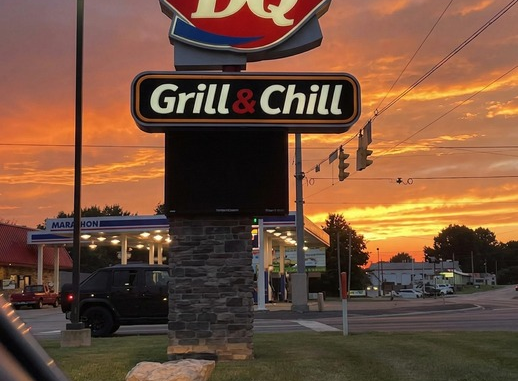
A simple handwritten sign outside a Dairy Queen in Kewaskum quickly sparked a nationwide discussion. The message, blending holiday cheer with a tribute to veterans and offering free sundaes as a gesture of thanks, drew attention when one phrase, described by the owner as “politically incorrect,” began circulating online. In a matter of days, a small-town business found itself at the center of a broader debate about public messaging and the impact of words beyond their intended context.
For some, the sign came across as warm and patriotic, reflecting local tradition. Others felt certain wording was exclusionary, showing how a message meant for a small community audience can take on new significance when shared nationwide. The rapid online spread illustrated the power—and risk—of public communication in the digital age.
Owner Kevin Scheunemann explained that the sign was intended to honor veterans and reflect his personal values. He noted that similar messages had been displayed in previous years without incident and emphasized that his restaurant welcomes all community members. His remarks highlighted the recurring tension between intent and perception in public discourse.
The episode also brought attention to a larger challenge faced by small business owners: balancing personal expression with the expectation of inclusivity. Dairy Queen clarified that franchisees make local decisions about signage, independent of corporate policy. What began as a small-town holiday display ultimately became part of a national conversation about language, tradition, and the evolving responsibilities of businesses in shared spaces.