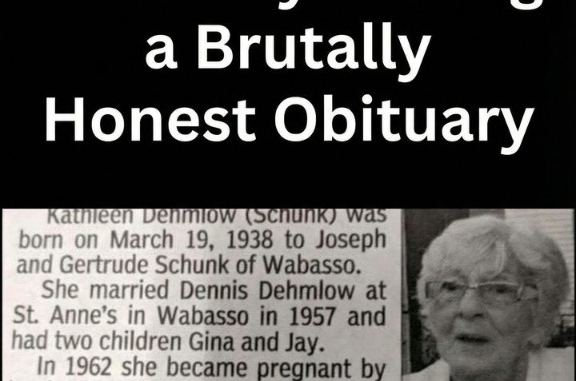
When Kathleen Dehmlow’s obituary appeared in a local Minnesota newspaper, it initially looked like many others, briefly summarizing her life, listing surviving family members, and noting her passing. However, certain lines written by her adult children stood out, including blunt references to painful family history. This unusual approach turned what is typically a respectful tribute into a public statement highlighting unresolved family issues.
The obituary quickly gained attention online, far beyond the small Minnesota community where it was first published. Some readers argued that obituaries should remain spaces for remembrance and compassion, while others viewed the notice as an honest, if uncomfortable, acknowledgment of long-standing family struggles. The situation sparked a broader discussion about whether obituaries must always portray lives positively or if they can reflect complicated realities.
Amid the public reaction, the newspaper removed the obituary, citing the intensity of responses and questions about whether it met their editorial standards. Despite its removal, the conversation had already spread widely across social media and news outlets.
The episode prompted reflection on the role of obituaries in shaping memory. Families act as storytellers, deciding which aspects of a life are remembered and which are left behind. The debate over Kathleen Dehmlow’s obituary highlighted the power—and potential controversy—of those final words, showing that a person’s closing narrative can reopen old chapters and provoke meaningful conversations about truth, memory, and legacy.