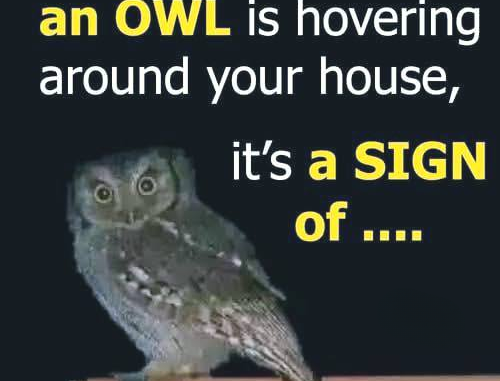
On dark, mysterious nights, a graceful and captivating bird moves silently through the sky—the owl. Its quiet flight and intense gaze have intrigued people for generations, giving rise to myths, legends, and deep admiration.
Owls are highly skilled nocturnal hunters, equipped with exceptional hearing and sharp vision. They hunt with remarkable accuracy, feeding on small mammals, insects, and even other birds, showing both adaptability and dominance in the night.
Their bodies are perfectly designed for darkness. With forward-facing eyes that allow binocular vision and facial discs that funnel sound efficiently, owls can detect even the faintest movements, far beyond human ability.
One of their most impressive traits is silent flight. Specialized feathers minimize noise and turbulence, enabling them to approach prey without being noticed—an essential advantage for hunting in the dark.
These birds are found all over the world, living in forests, deserts, grasslands, and even cities. Their ability to thrive in such varied environments highlights their flexibility in finding food and shelter.
While many owls are active at night, some species are more active during dawn or dusk. Their activity often depends on when prey is available and seasonal environmental changes.
Beyond their hunting skills, owls are vital to ecosystems. By controlling rodent and insect populations, they help maintain balance and even protect crops from damage.
Culturally, owls have held symbolic meaning for thousands of years. In ancient Greece, they were linked to Athena, the goddess of wisdom, representing intelligence and insight.
In various Native American traditions, owls are seen as messengers or guardians, sometimes offering warnings or guidance and symbolizing intuition and awareness of hidden forces.
During the Middle Ages, however, owls were often feared and associated with death or bad luck, reflecting human uncertainty about creatures of the night.
Today, they are more commonly seen as symbols of wisdom and perception. Spotting an owl near your home may be interpreted as a reminder to reflect, observe carefully, and act thoughtfully.
Their hooting serves many purposes, such as marking territory, attracting mates, or communicating presence. Each species has unique calls that can travel long distances in the quiet night.
Some species, like barn owls, rely heavily on their hearing to locate prey beneath grass or snow, detecting movements humans would never notice.
Owls have a varied diet, adapting to their surroundings by feeding on mammals, insects, reptiles, amphibians, and birds depending on availability.
They are also adept at avoiding danger. Camouflage, nighttime activity, and careful resting spots help protect them from predators and disturbances.
Their breeding habits are equally interesting. Many form long-term pairs, nesting in tree hollows, cliffs, or even abandoned buildings, with both parents caring for their young.
Symbolically, owls often appear in dreams as signs to trust intuition, embrace solitude, or face hidden truths.
Their ability to remain unnoticed near human homes adds to their mystery. Camouflaged feathers help them blend into surroundings, making their presence subtle and surprising.
Hearing an owl at night can evoke both calm and unease, shaped by centuries of folklore and instinctive reactions to the unknown.
Watching owls can be a rewarding experience. Bird enthusiasts study their behavior, calls, and hunting techniques to better understand nocturnal ecosystems.
They also inspire creativity in art, literature, and media, often representing wisdom, mystery, or transformation.
Some species, such as large horned owls, are top predators, capable of taking down bigger prey and surviving in challenging conditions.
Their eyes are adapted for low light, with specialized cells that detect even slight movement, giving them an advantage in darkness.
Their facial structure directs sound to unevenly placed ears, allowing precise location of prey even when hidden.
Their feathers are built for stealth, reducing noise during flight and helping them remain undetected.
However, owls face threats like habitat loss, pesticides, and urban expansion. Protecting their environments is crucial for their survival.
Artificial light can disrupt their natural behavior, affecting hunting and reproduction, which is why preserving dark skies is important.
Many owls have adapted to city life, nesting in parks, cemeteries, and abandoned buildings, showing resilience in human-altered landscapes.
Their vocalizations reveal complex communication, used for territory, mating, and interaction with their young.
Another remarkable trait is their ability to rotate their heads up to 270 degrees, compensating for fixed eyes and enhancing their field of vision.
Seeing an owl nearby is often interpreted as a symbol of awareness and insight, encouraging reflection and attentiveness.
They also represent patience and precision, qualities reflected in their stillness and timing while hunting.
In some Asian cultures, owls symbolize good fortune and protection, inspiring positive associations.
Their nesting strategies vary widely, from reusing other birds’ nests to digging burrows or using tree cavities.
Young owls rely heavily on their parents, learning essential survival and hunting skills before becoming independent.
By controlling pests, owls contribute significantly to ecological balance and agricultural health.
Encountering one at night can inspire mindfulness and a deeper connection to nature.
Observing them requires attention to subtle cues like sounds and movement, offering a glimpse into hidden nighttime activity.
Scientists study owls to understand their sensory abilities, flight mechanics, and behavior, gaining insights into evolution and adaptation.
From mythology to modern science, owls hold a special place in human understanding, symbolizing mystery and intelligence.
Their survival depends on conservation efforts and public awareness to protect their habitats and reduce harmful practices.
Whether seen as hunters, symbols, or silent observers, owls deepen our appreciation of the natural world.
Ultimately, the owl represents a blend of biology, culture, and reflection—an enduring symbol of wisdom, resilience, and the quiet beauty of the night.