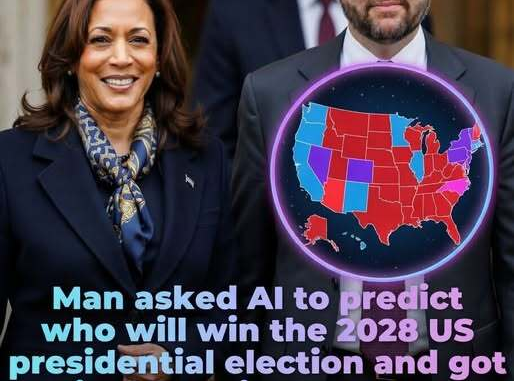
This simulation distills potential developments in American politics into data-driven patterns, but its insights feel very real. On the Democratic side, Kamala Harris emerges as an early frontrunner, benefiting from strong name recognition and institutional support. Yet the model also reflects ongoing internal divisions within the party, suggesting that early advantage doesn’t guarantee cohesive momentum.
For Republicans, JD Vance appears as a leading figure, with his support tied to shifts in voter behavior, particularly in Midwestern and working-class communities—areas that have seen changing political preferences over recent election cycles. The simulation presents his rise not as a sudden surprise, but as part of a broader, long-term realignment.
Looking at the simulated Electoral College map, the results reveal more than a single winner. Some traditionally competitive states shift in unexpected ways, and even historically stable regions show new unpredictability. These patterns highlight underlying demographic and political changes that may influence how both parties strategize for future elections.
The creators stress that the simulation isn’t meant to predict a definitive outcome. Instead, it serves as a tool for exploring possible scenarios, testing assumptions, and understanding how evolving voter behavior could shape the political landscape. In essence, it’s less about forecasting one result and more about examining the forces driving change in U.S. politics.