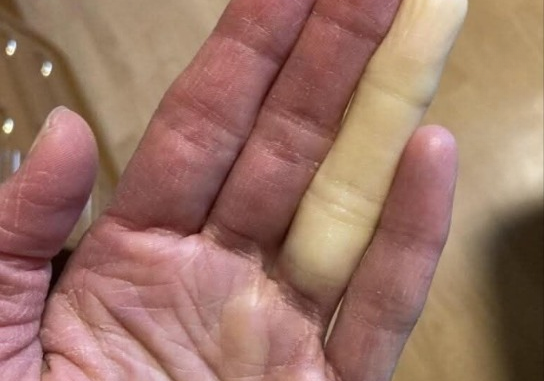
As winter arrives and temperatures fall, the body can react in ways that feel unexpected—or even unsettling. For some people, exposure to the cold goes beyond simple discomfort, causing noticeable changes in areas like the fingers, toes, ears, or nose. The skin might become pale, take on a bluish tint, or lose sensation altogether, which can be alarming until normal feeling gradually returns. While it’s often brushed off as a typical response to cold weather, there can sometimes be a deeper explanation.
This reaction is commonly associated with Raynaud’s phenomenon, a condition in which the body’s small blood vessels temporarily constrict in response to cold or emotional stress. As a result, blood flow to certain parts of the body is reduced, producing clear color changes. Typically, the affected areas turn white as circulation decreases, then blue as oxygen levels drop, and finally red as blood flow is restored. Although it may appear dramatic, this process is actually the body’s way of preserving heat—though it can also cause discomfort or pain.
For many individuals, Raynaud’s is mild and manageable, yet it’s more widespread than often assumed, affecting a significant number of adults—many of whom may not even realize they have it. In some cases, it occurs independently (known as primary Raynaud’s), while in others it may be linked to underlying conditions involving the immune system or blood vessels. Because of this, frequent or severe symptoms should not be overlooked, especially if they disrupt daily activities or become progressively worse.
Gaining awareness of this condition is an important step toward managing it. Simple measures—such as dressing warmly, minimizing stress, and avoiding rapid temperature changes—can help reduce episodes. If symptoms become more persistent or intense, consulting a healthcare professional is advisable to check for any related conditions and determine the best course of care. What might seem like a minor seasonal annoyance can, for many, be an important signal that deserves closer attention.